Why Your Room Still Doesn't Feel Right… Even After You've Redecorated
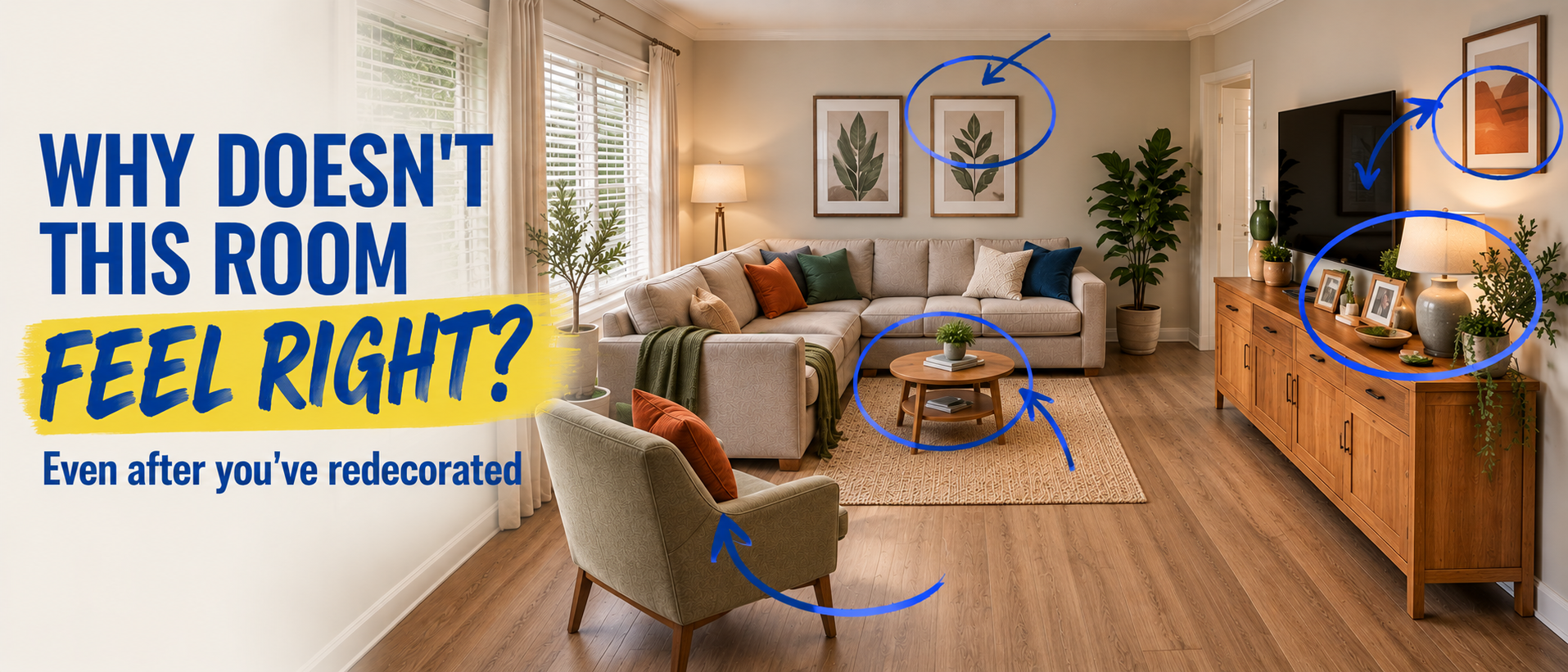
You've painted the walls. You've bought some new furniture. Maybe you've changed the flooring, added a rug, updated the cushions and finally replaced that old lamp.
Individually, you like everything you've chosen. But when you stand back and look at the room, something still doesn't quite feel right.
It's easy at this point to assume you've made a bad choice somewhere, or that you need to buy something else to finish the room. Often, that's not the problem at all.
A room can contain plenty of things you love and still feel slightly off because of scale, proportion, placement or a lack of connection between different elements.
Before you start redecorating all over again, here are some things worth checking.
1. Your Furniture Might Be the Wrong Scale
Furniture has to work with the size of the room, but it also needs to work with the size of everything around it.
A large lounge paired with a tiny coffee table can look out of proportion. A small two-seater sitting alone in a large living room can have the opposite problem.
The same thing can happen with a dining table that's too large for the space around it, or bedside tables that overwhelm a relatively small bed.
None of those pieces necessarily look bad on their own.
The problem is the relationship between them.
When looking at your room, don't just ask whether each piece fits. Look at whether the different pieces feel appropriately sized beside one another and whether there's enough space around them.
Sometimes changing one piece can bring everything else back into proportion.
2. Your Rug Might Be Too Small
This is one of the simplest things to overlook. A rug can help connect a group of furniture and visually define an area, particularly in an open-plan home.
But if it's too small, it can do exactly the opposite.
In a living room, a small rug sitting beneath only the coffee table can look like it's floating in the middle of the room while the lounge and chairs sit separately around it.
Where space allows, a larger rug that relates properly to the surrounding furniture can make the whole arrangement feel more connected.
The difference between an undersized rug and a properly proportioned one can be surprisingly dramatic.
Sometimes it's not the furniture that looks wrong. It's what's sitting between it.
3. Everything Is Pushed Against the Walls
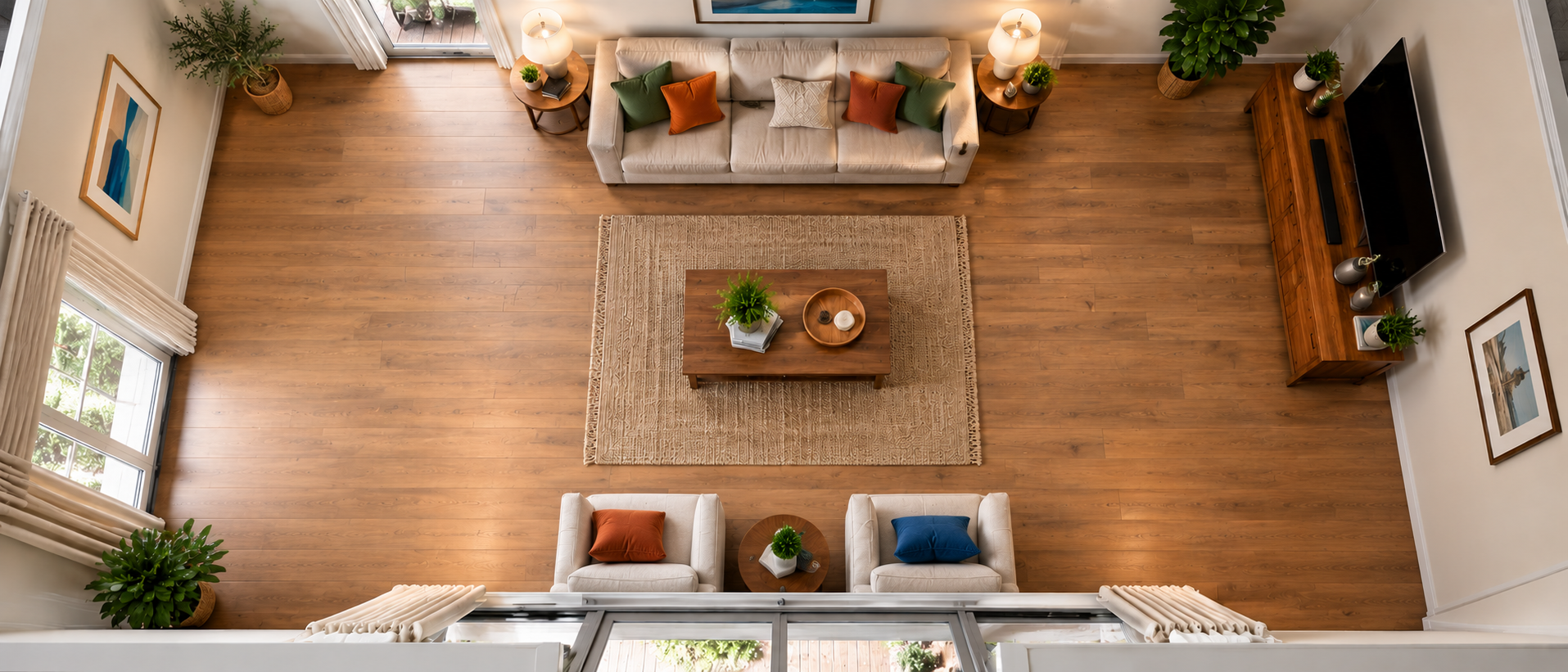
It's natural to think that pushing furniture against the walls will create more space. In some small rooms, that may be exactly what you need to do.
But in larger rooms, it can leave an empty area in the middle while all the furniture feels disconnected around the edges. Try bringing the lounge forward slightly.
Move an occasional chair closer to the main seating area.
Give a side table a clear relationship with the chair or lounge it's supposed to serve.
You don't need huge gaps behind your furniture. Even relatively small adjustments can make a seating area feel much more deliberate.
This can be particularly useful in an open-plan room, where the furniture itself can help define the living area.
Not every piece of furniture needs a wall behind it.
4. There's No Clear Focal Point
When you walk into the room, where does your eye go? A room often feels more settled when there's something that naturally attracts your attention.
That might be a large artwork, an attractive entertainment unit, a feature chair, a fireplace or even a particularly nice window and view.
Problems can occur at both extremes… Sometimes nothing stands out.
Other times, everything is trying to stand out.
A boldly patterned rug, colourful feature chair, large artwork, statement cushions and heavily decorated sideboard might all look great individually, but together they can compete for attention.
You don't need to remove every interesting element from the room. Instead, decide which features you want to lead and allow some of the others to play a quieter supporting role.
5. The Colours Are Nice Individually, but They Don't Connect
You can choose several beautiful colours and still end up with a room that feels disjointed.
Imagine a sage-green chair, burnt-orange artwork, blue cushions, a neutral lounge and warm timber furniture. There's nothing inherently wrong with that combination. But if every colour appears only once, each element can feel isolated.
One of the easiest ways to create a sense of connection is to repeat colours subtly around the room.
If you have a burnt-orange feature in your artwork, perhaps that colour appears again in a cushion.
The sage from an occasional chair might appear subtly in the rug.
A royal-blue cushion could connect with a small amount of blue in artwork or another decorative item.
It doesn't need to be an exact colour match. You're simply giving the eye little connections as it moves around the room.
6. Your Flooring and Furniture Might Be Fighting Each Other
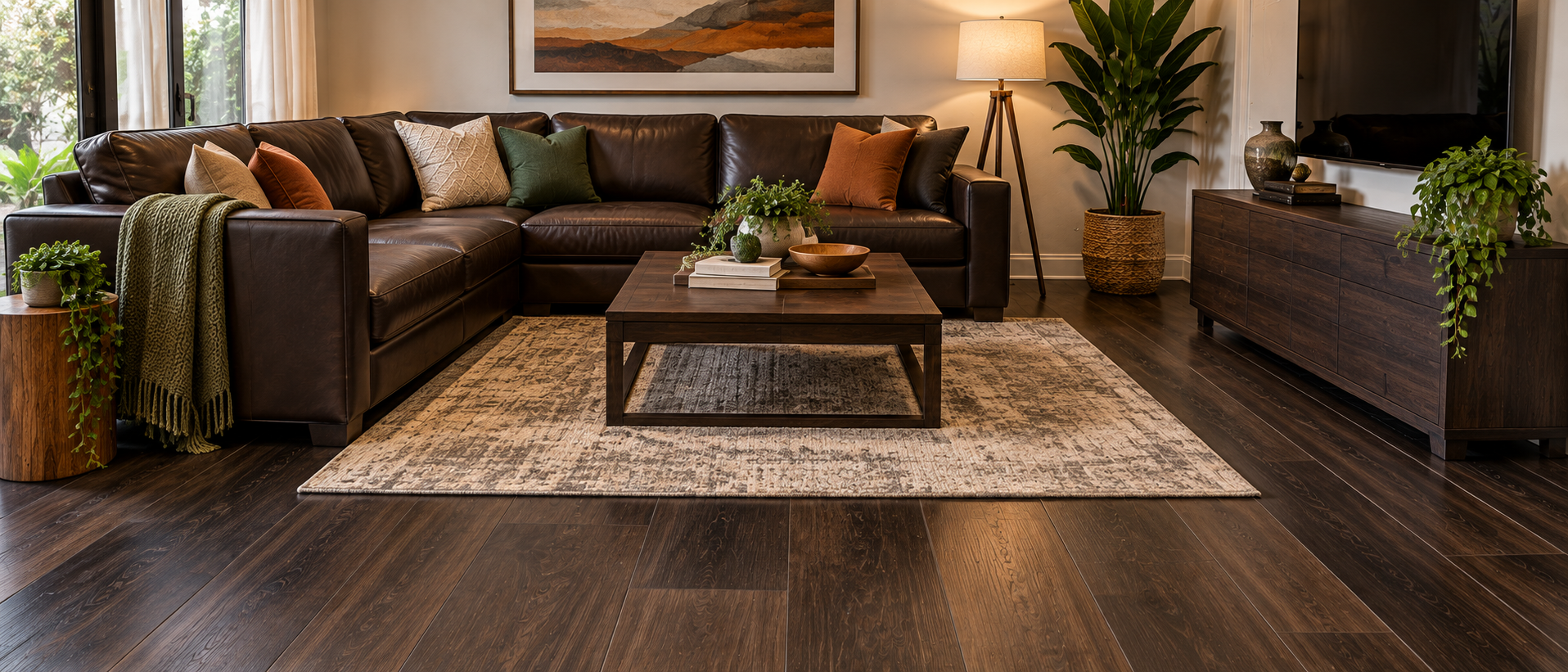
Flooring forms the backdrop to almost everything else in the room, so it can have a big influence on how your furniture looks. Sometimes the individual choices are perfectly good, but the combination isn't quite working.
Dark furniture on a very dark floor can lose definition.
Several different timber tones can sometimes compete rather than complement each other.
A strongly patterned rug over an already visually busy floor can introduce more detail than the room needs.
You can also run into problems with colour temperature. A very cool floor, for example, may feel disconnected from a room filled with warm timbers and warmer colours.
That doesn't automatically mean the flooring or furniture needs replacing.
A rug can sometimes provide the visual break that's needed. Changing nearby colours may help. Simplifying another part of the room can also bring things back into balance.
Look at the floor and furniture as a combination, rather than assessing each one separately.
7. You May Have Too Much Furniture
There's a difference between furniture being too large and simply having too much of it.
You might have a lounge, two recliners, an occasional chair, coffee table, two side tables, entertainment unit and display cabinet.
Every individual piece fits.
Every piece has a purpose.
But together, the room feels crowded.
Before deciding that you need different furniture, try temporarily removing one or two pieces. Put the occasional chair somewhere else. Remove one side table. Move the display cabinet into another room for a few days.
Then look at the space again.
You may find the furniture that remains suddenly looks better simply because it has some breathing room.
Sometimes the easiest way to improve a room isn't to add something. It's to take something away.
8. Everything Is the Same Height
This one is less obvious.
Look around your room and imagine drawing a line across the top of the furniture. If the lounge, chairs, sideboard, entertainment unit, tables and most of the decorative items sit at roughly similar heights, the room can feel visually flat.
Introducing some height variation gives the eye somewhere to travel. That might come from a taller floor lamp, artwork above a sideboard, a taller indoor plant or a pendant over the dining table.
Even the height at which artwork is positioned can change the balance of a room. You don't need something tall in every corner.
A few carefully placed elements at different levels can be enough.
9. The Room Is Missing Texture
Sometimes a room has a good colour palette and well-proportioned furniture but still feels a little lifeless.
Before adding another colour, consider whether what you're actually missing is texture.
A room might include smooth timber flooring, an upholstered lounge, a woven rug, linen cushions, a knitted throw and a ceramic lamp, all within a fairly restrained colour palette.
Those different surfaces create interest without making the room feel busier. This is particularly useful when decorating with neutrals.
Cream, beige and warm timber don't have to feel plain when there's enough variation in the materials and textures being used.
Texture can often do the job people expect more colour or more decoration to do.
10. You've Added Too Many Finishing Touches
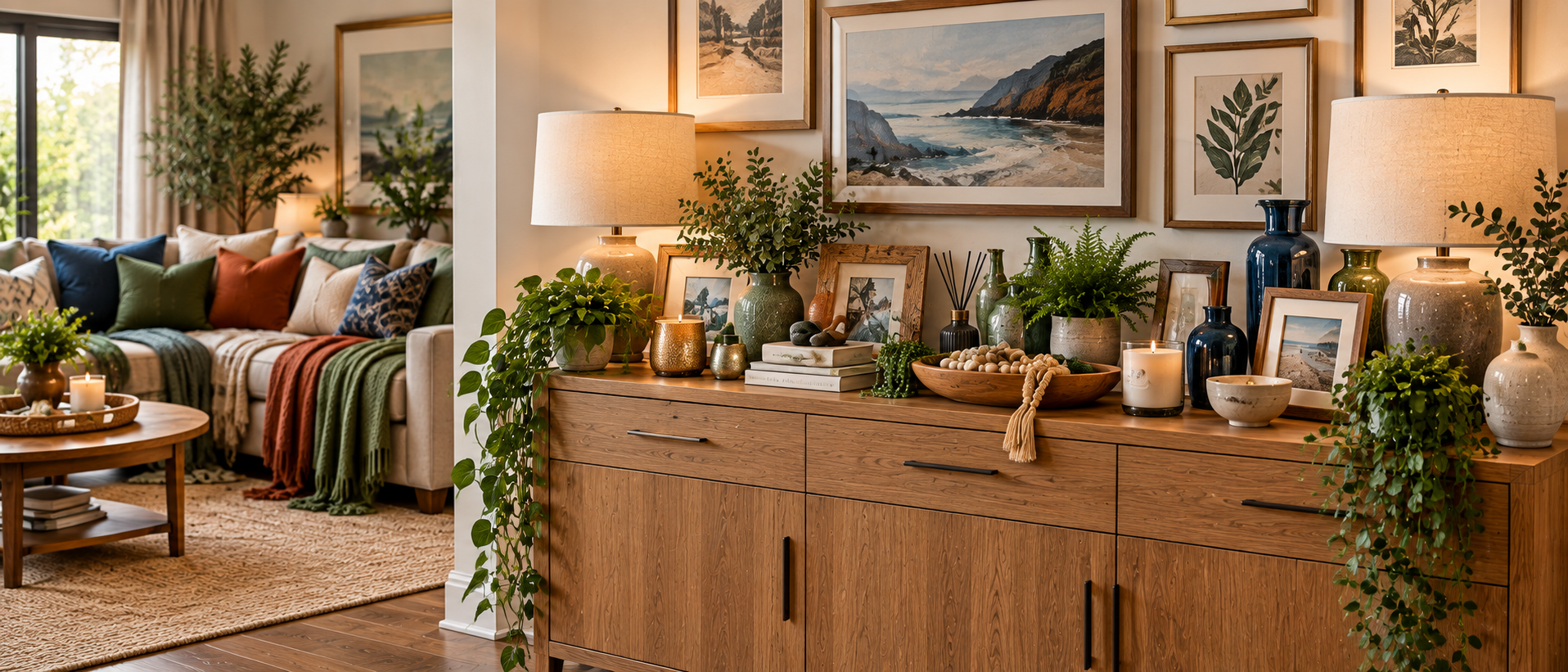
This is an easy trap to fall into after redecorating. The room doesn't quite feel finished, so you buy another cushion. Then a plant. Then something for the coffee table.
The sideboard looks empty, so you add a few decorative pieces there. There's a blank section of wall, so another picture goes up.
Eventually, all those finishing touches can become the reason the room doesn't feel finished.
If this sounds familiar, try taking some things away.
Clear the coffee table except for one or two items. Remove a few cushions. Simplify the top of the sideboard.
You don't have to throw anything out. Put the extra pieces away and live with the room for a few days.
Then bring back only the things you actually miss.
Not every surface needs something on it, and not every empty wall needs filling.
11. Something Might Simply Be in the Wrong Place
Before buying anything else, move what you already have. It sounds almost too simple, but furniture placement can completely change how a room feels.
Rotate the dining table 90 degrees.
Move the occasional chair to the other side of the lounge.
Bring the lounge slightly forward.
Shift the rug.
Try the sideboard on another wall.
Look at whether artwork is positioned in relation to the furniture beneath it rather than simply centred on the wall.
Take a photo before you move anything and another afterwards. Photos can be surprisingly useful because they allow you to look at the room more objectively than when you're standing in it.
And don't be afraid to experiment. If it doesn't work, you can always put it back.
Don't Start Again. Find the Problem.
When a room still doesn't feel right after you've redecorated, it's tempting to assume you've chosen the wrong furniture, flooring, rug or colours. That isn't always the case.
Before spending more money, look at the room differently.
Is the rug large enough?
Is there too much furniture?
Are your colours repeated around the room?
Is everything pushed against the walls?
Does your furniture work with the flooring?
Could the layout simply be better?
Often, you don't need another complete makeover… You just need to find the one or two things that are stopping the room from coming together.
If you're stuck trying to work out what isn't working, take a few photos and measurements of your room and bring them with you to Ron Mahers Flooring & Furniture. Whether you're considering new flooring, a different rug or replacing a piece of furniture, seeing what you already have can make it much easier to find something that actually works with the room.
Because sometimes the best way to improve a room isn't to start again.
It's to work out what's not quite right… and fix that.