Keep, Replace or Refresh? Deciding What Stays When Redoing a Room
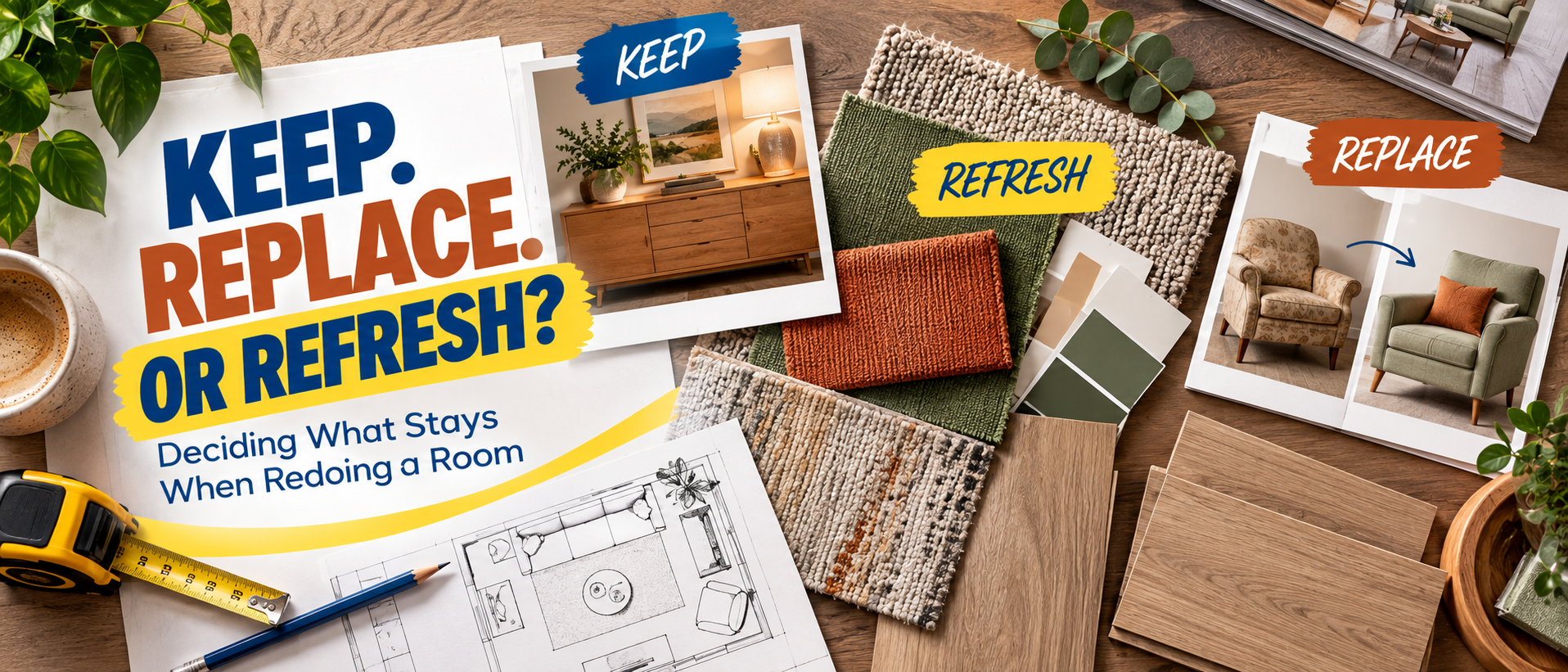
Redoing a room doesn't have to mean starting again.
In fact, some of the best room refreshes happen when you keep the pieces that are still working, replace the things that genuinely need changing and find simple ways to make old and new work together.
Perhaps you have a lounge that's still comfortable but the room around it feels dated. Maybe you love your dining table but you're tired of everything else. Or perhaps you've been looking at new furniture when it's actually the flooring that's making the whole room feel tired.
Before you start shopping, it's worth asking three simple questions:
Keep it? Replace it? Or refresh what's around it?
Taking a little time to work that out can help you spend your money where it will make the biggest difference.
1. Start With What You Definitely Want to Keep
Before thinking about what's going, decide what's staying. Most of us have something in a room that we don't particularly want to replace.
It might be a comfortable lounge, a quality timber dining setting, a favourite recliner or a piece of furniture that simply works well for your household.
Sometimes there's sentimental value involved too. Whatever the reason, these pieces become your starting point.
If you're keeping a large brown leather lounge, for example, don't plan the new room as though it doesn't exist. Look at its colour, size and style and consider what could work around it.
The same applies to a dining table, rug, artwork or any other significant piece.
Design around the things you're keeping rather than trying to make them fit afterwards.
2. Don't Replace Something Just Because It's Older
New doesn't automatically mean better.
A good-quality timber dining table might be 15 or 20 years old and still have plenty of life left in it. Meanwhile, a much newer lounge might already be uncomfortable or no longer suitable for the room.
Rather than looking at age, consider four things:
Condition. Comfort. Usefulness. Fit.
Is it still in good condition?
Is it comfortable?
Do you actually use it?
Does its size and shape still work in the room?
If the answer to those questions is yes, there may be very little reason to replace it.
Keeping a perfectly good piece also means you can put more of your budget towards the parts of the room that genuinely need attention.
3. Work Out What's Actually Making the Room Feel Dated
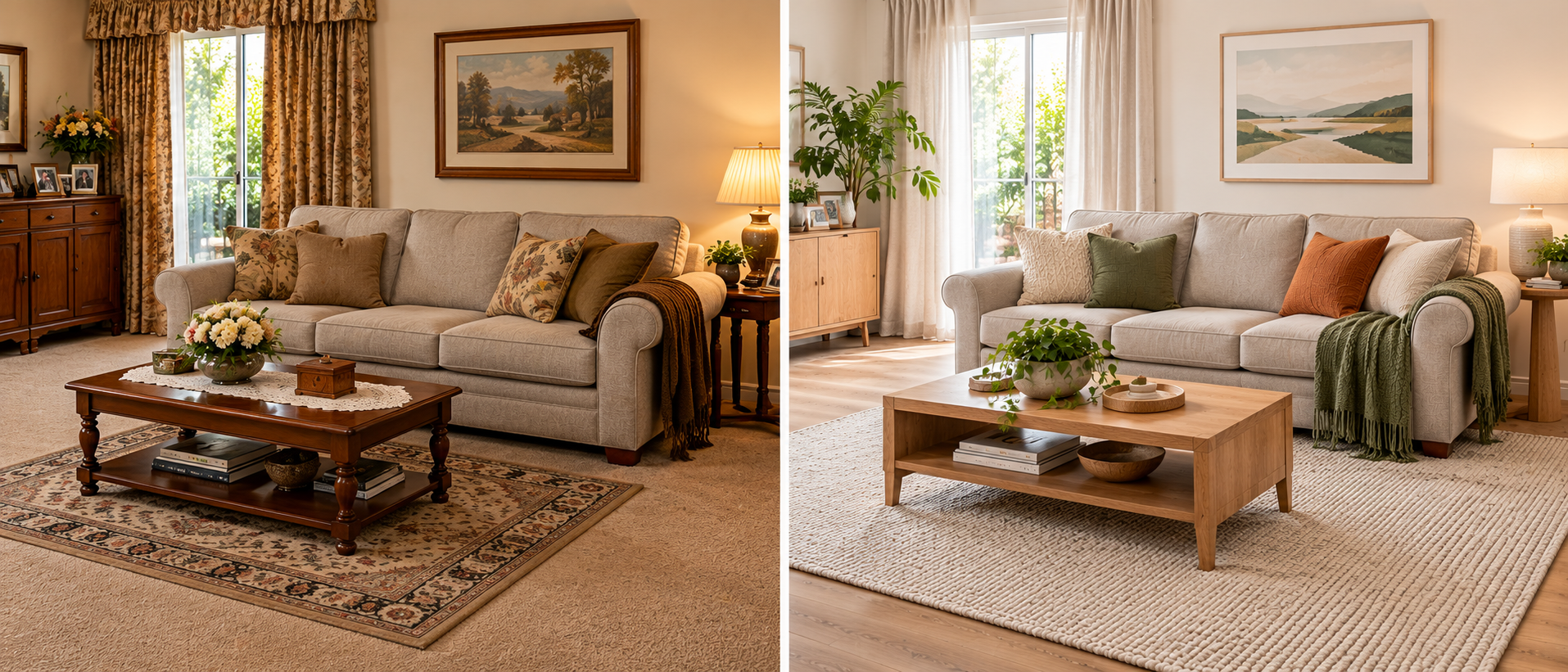
Sometimes we blame the most obvious piece of furniture when the problem is actually everything around it.
You might look at your lounge and think:
“That needs replacing.”
But imagine that same lounge in a room with new flooring, a larger contemporary rug, lighter curtains and a few updated cushions. Would it still look dated? Perhaps. But perhaps not.
A room is made up of lots of elements working together. Flooring, furniture, window coverings, rugs, lighting, artwork and accessories all contribute to the overall feel.
That's why it's worth looking at the room as a whole before deciding what has to go.
Try temporarily removing some accessories or moving smaller pieces into another room. Take a photo and look at the space again.
Sometimes it's easier to identify what's really bothering you once some of the visual clutter has disappeared.
4. Sometimes the Floor Is the Biggest Change You Can Make
Flooring is easy to overlook because we become accustomed to seeing it every day. But it's also one of the largest surfaces in the room.
Old, heavily worn or dated flooring can influence how everything sitting on top of it looks.
Changing an older carpet to a more contemporary colour and texture, for example, can completely change the background against which your existing furniture is viewed.
The same can happen when moving from older flooring to a modern plank floor. Suddenly, furniture you've owned for years can look quite different.
That doesn't mean flooring should automatically be the first thing you replace. If it's still in good condition and works with the direction you're taking, keep it.
But if you're considering replacing several pieces of furniture because the entire room feels tired, take another look at what's underneath them first.
One significant change can sometimes achieve more than several smaller ones.
5. A Rug Can Be the Bridge Between Old and New
A rug can do much more than provide something soft underfoot. It can also help connect furniture that wasn't purchased together.
Imagine you're keeping an existing grey lounge but adding a new timber entertainment unit and a burnt-orange occasional chair. Individually, they're three quite different elements.
Now introduce a rug containing warm neutrals, some grey and a subtle burnt-orange detail. Suddenly, there's a visual connection between them.
The rug doesn't need to contain the exact colours of every piece. It simply needs to give the different elements something in common.
This can be particularly useful when you're refreshing a room gradually rather than buying everything at once.
Old and new don't have to match. They just need something that helps them belong together.
6. Consider Whether the Problem Is the Furniture… or Its Position
Before replacing a piece of furniture, try moving it. It costs nothing and can completely change how a room works.
A lounge might feel too large because it's positioned across the natural walkway.
A recliner might feel awkward because it needs clearance to operate but has been squeezed between other furniture.
A dining table that feels too big in one direction might work much better rotated 90 degrees.
Two occasional chairs that seem disconnected from the rest of the room might suddenly make sense when they're brought closer to the lounge.
Look at how people actually move through the space.
Can you comfortably walk between the furniture?
Can doors open?
Can drawers be accessed?
Can recliners operate properly?
Does the furniture encourage people to sit together, or does everything feel scattered around the edges of the room?
Sometimes the furniture isn't wrong. The layout is.
7. Replace the Pieces That Aren't Working Anymore
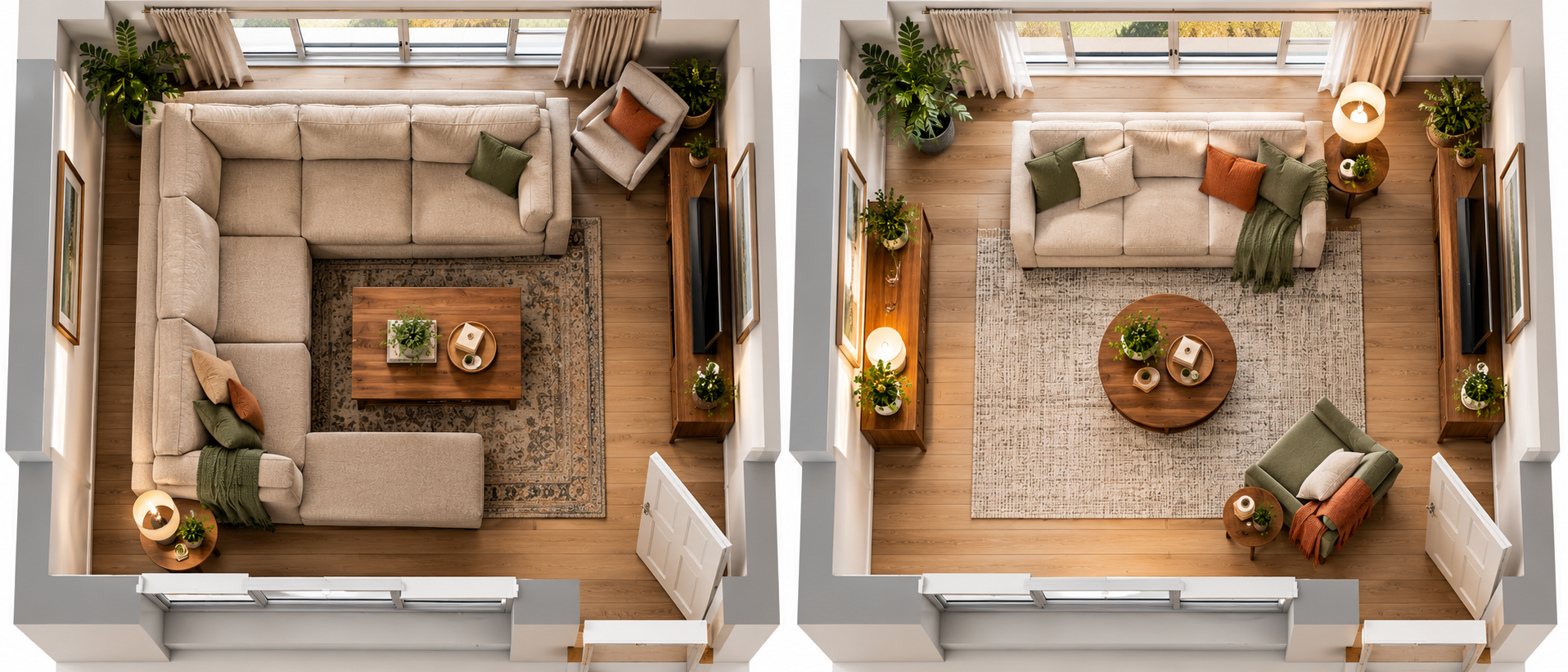
Of course, there comes a point when keeping something no longer makes sense. Furniture is there to be used.
If a lounge is uncomfortable, a recliner no longer operates properly or a dining setting is simply too large for the room, those are practical reasons to consider replacing it.
The same applies when your needs have changed.
Perhaps you once needed a large dining table for a busy household but now you'd rather reclaim some floor space.
Maybe you've moved into a smaller home and your previous furniture overwhelms the room.
Or perhaps you've discovered that the lounge configuration you've had for years simply doesn't suit the way you use the space anymore.
A piece can still be perfectly good furniture and no longer be the right furniture for your room. That's an important distinction.
8. New Furniture Doesn't Have to Match What You're Keeping
One of the challenges when replacing only part of a room is finding something that works with the furniture that's staying. The temptation can be to search for an exact match.
You have a timber coffee table, so you try to find an entertainment unit in exactly the same timber.
You have a grey lounge, so you look for exactly the same grey chair.
Often, you don't need to. Look for connections rather than identical finishes.
Two timber pieces can work together even if they're slightly different tones. An upholstered chair can complement a lounge without being the same colour. Different furniture styles can sit comfortably together when their proportions and overall character make sense.
Think about:
Colour. Shape. Material. Scale. Style.
You only need enough connection for the pieces to feel deliberate.
A room collected over time can often feel more relaxed and interesting than one where every piece came from exactly the same range.
9. Refresh the Smaller Things Last
This is the fun part, but don't rush into it.
Cushions, throws, lamps, plants, artwork and decorative pieces can make a big difference to a finished room. They're also relatively easy to change.
That's exactly why they're better left until the larger decisions have been made.
Imagine buying a collection of blue cushions and artwork, then later finding the perfect rug has warm greens and burnt-orange tones.
You've unnecessarily restricted your choices.
Instead, get the major elements working first.
Flooring → major furniture → rug → finishing touches.
Once those are working together, use the smaller pieces to reinforce the colours and style you've already established.
And don't feel as though every empty surface needs decorating. A few intentional pieces will often make a room feel more finished than lots of small objects competing for attention.
10. Take Photos and Measurements Before You Go Shopping
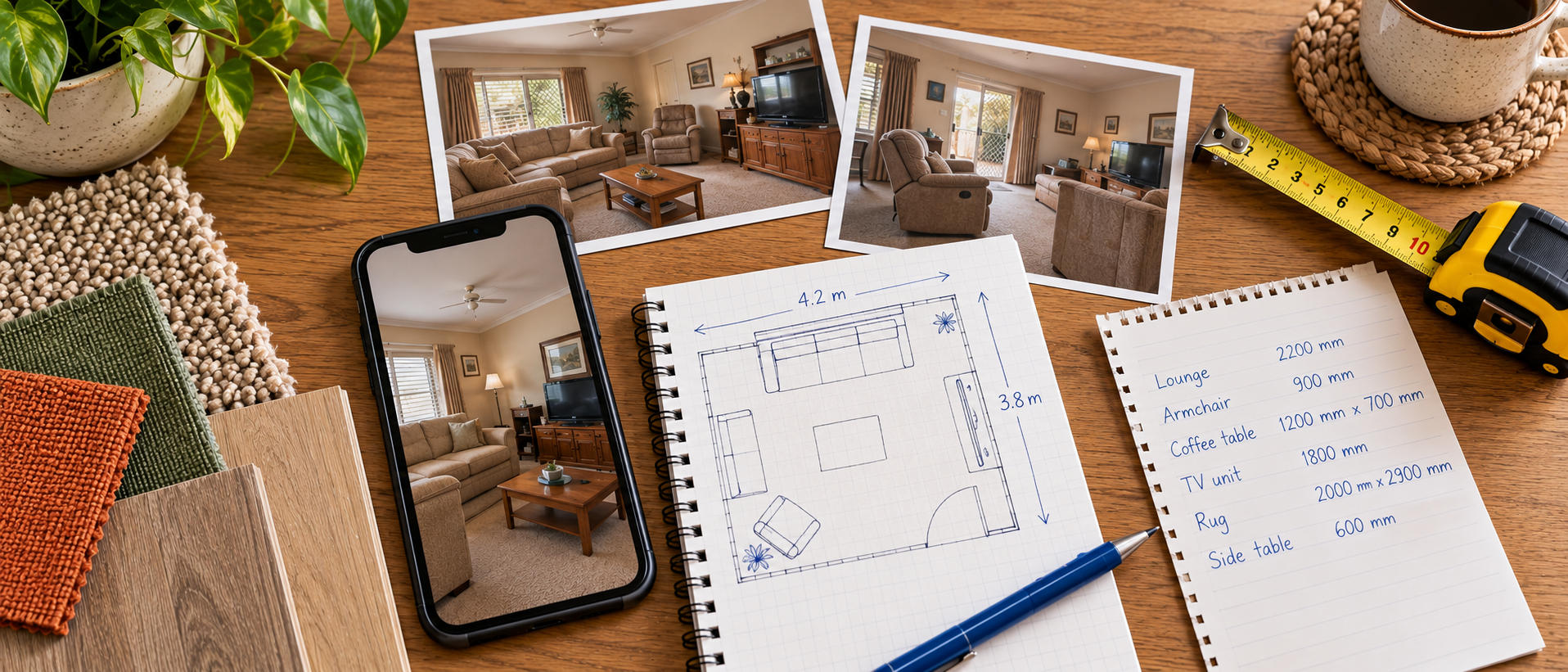
After moving the furniture around, and it still doesn’t work. make a list of what will fit into the space.
Once you know what's staying and what might need replacing, make it easier to shop for the right pieces.
Take photos of the room from several angles. Measure the room itself and the major furniture you're keeping. Make a note of doorways, windows and other areas where space is limited.
If colour is particularly important, take a close-up photo of the furniture or flooring you're trying to work with.
Better still, if you have a flooring, fabric or colour sample available, take it with you. This gives you something to refer back to when you're looking at new furniture or rugs.
It's surprisingly difficult to remember exactly how large your lounge is or precisely what shade of timber your dining table happens to be when you're standing in a showroom.
A few photos and measurements can take a lot of the guesswork out of the decision.
Keep, Replace or Refresh?
Redoing a room doesn't have to mean replacing everything in it.
Start with what you still like. Look at what still works. Try changing the furniture layout. Then identify what's genuinely letting the room down.
You might discover that your existing furniture looks completely different against new flooring. A new rug might be enough to connect furniture you've owned for years with something you've just bought. Or replacing one major piece might finally allow the whole room to work better.
The important thing is to make those decisions as part of the room rather than one purchase at a time.
If you're planning a room refresh, bring some photos and measurements with you when you visit us at Ron Mahers Flooring & Furniture. We can help you look at flooring, furniture and rugs alongside the pieces you're planning to keep.
Because redoing a room isn't necessarily about starting again.
It's about making better use of what you've already got… and knowing what will make the biggest difference when you do decide to change something.