Matching New Furniture With What You Already Own

You’ve found a new lounge, dining setting or occasional chair you love. There’s just one problem… you’re not starting with an empty room.
You already have flooring, furniture, rugs and other pieces that aren’t going anywhere, so how do you make something new work with what you already own?
The good news is that your furniture doesn’t all have to match.
In fact, a room can often look more natural and inviting when different pieces complement each other rather than looking like they were all purchased as one matching set.
Here are some simple things to consider when adding new furniture to an existing room.
1. Start With the Pieces That Are Staying
Before choosing anything new, look at what you already have and decide what is staying.
Your flooring is an obvious one, but also consider larger pieces such as your lounge, dining table, entertainment unit, display cabinet or bedroom furniture.
These pieces give you a starting point.
If you’re keeping a large timber entertainment unit, for example, take that into consideration when choosing a new lounge or occasional furniture. Likewise, if you have a strong flooring colour or pattern, you’ll want your new furniture to work with it rather than compete with it.
You don’t need to design the entire room before you go shopping. Simply knowing which major pieces are staying can make choosing the next one much easier.
2. Don't Try to Match Everything Exactly
One of the easiest traps to fall into is trying to find an exact match for something you already own.
This is particularly common with timber furniture.
If you have a timber dining table, you might automatically start looking for chairs, cabinets and occasional furniture in exactly the same timber colour.
But they don't necessarily need to match.
In fact, two timber finishes that are almost identical can sometimes look more out of place than two deliberately different but complementary finishes.
Instead of concentrating on finding an exact match, look at the overall feel of the pieces.
Do they have similar styling? Do the colours work together? Does one provide enough contrast from the other?
Coordinated doesn't have to mean identical.
3. Use Colour to Tie Old and New Together
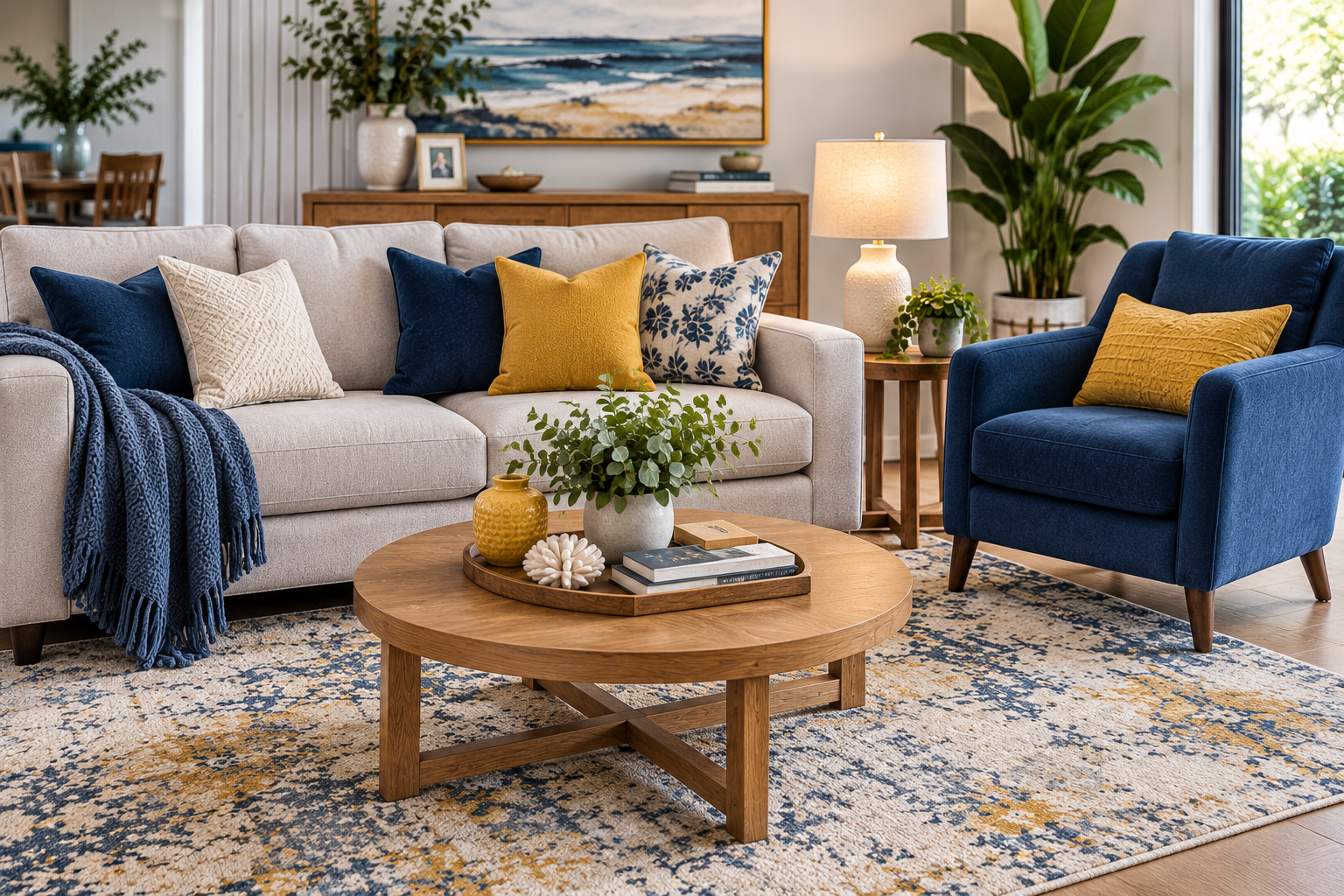
Colour is one of the simplest ways to make a new piece of furniture feel like it belongs.
Imagine you already have a neutral lounge and you've found a blue occasional chair you love.
Rather than worrying that the chair doesn't match the lounge, introduce a little of the same blue elsewhere in the room. A couple of cushions, some artwork or a patterned floor rug containing a similar shade can be enough.
Suddenly, the blue chair doesn't look like a random addition. It looks intentional.
You can use the same idea with almost any colour.
You don't need large amounts of it either. Small repeated touches throughout the room are often enough to visually connect different pieces.
4. Pay Attention to Your Flooring
Flooring is one of the largest surfaces in a room, so it can have a big influence on how furniture looks once you get it home.
This is especially worth considering with timber and timber-look flooring.
Putting furniture with a very similar timber colour directly onto the floor can sometimes cause the two to blend together. Introducing some contrast can help the furniture stand out.
Carpet can have a similar effect. A neutral carpet gives you plenty of flexibility, while flooring with a stronger colour or pattern may need a little more consideration.
And remember, you don't necessarily have to change either the flooring or the furniture if the combination isn't quite working.
Sometimes there's a much simpler solution.
5. Let a Floor Rug Bring Everything Together
A floor rug can be one of the easiest ways to connect furniture that wasn't originally purchased together.
In a living room, the rug sits right in the middle of your lounge, chairs and occasional furniture. That makes it an ideal place to introduce colours or patterns that relate to several different pieces.
For example, a rug might contain a little of the colour from your lounge, another colour from an occasional chair and tones that complement your flooring.
It effectively becomes the link between everything.
A rug can also create some separation between timber furniture and timber-look flooring, helping each stand out rather than blending into one another.
So, if your furniture feels like it's almost working together but something is missing, the answer might simply be the right rug.
6. Think About Size and Shape, Not Just Colour
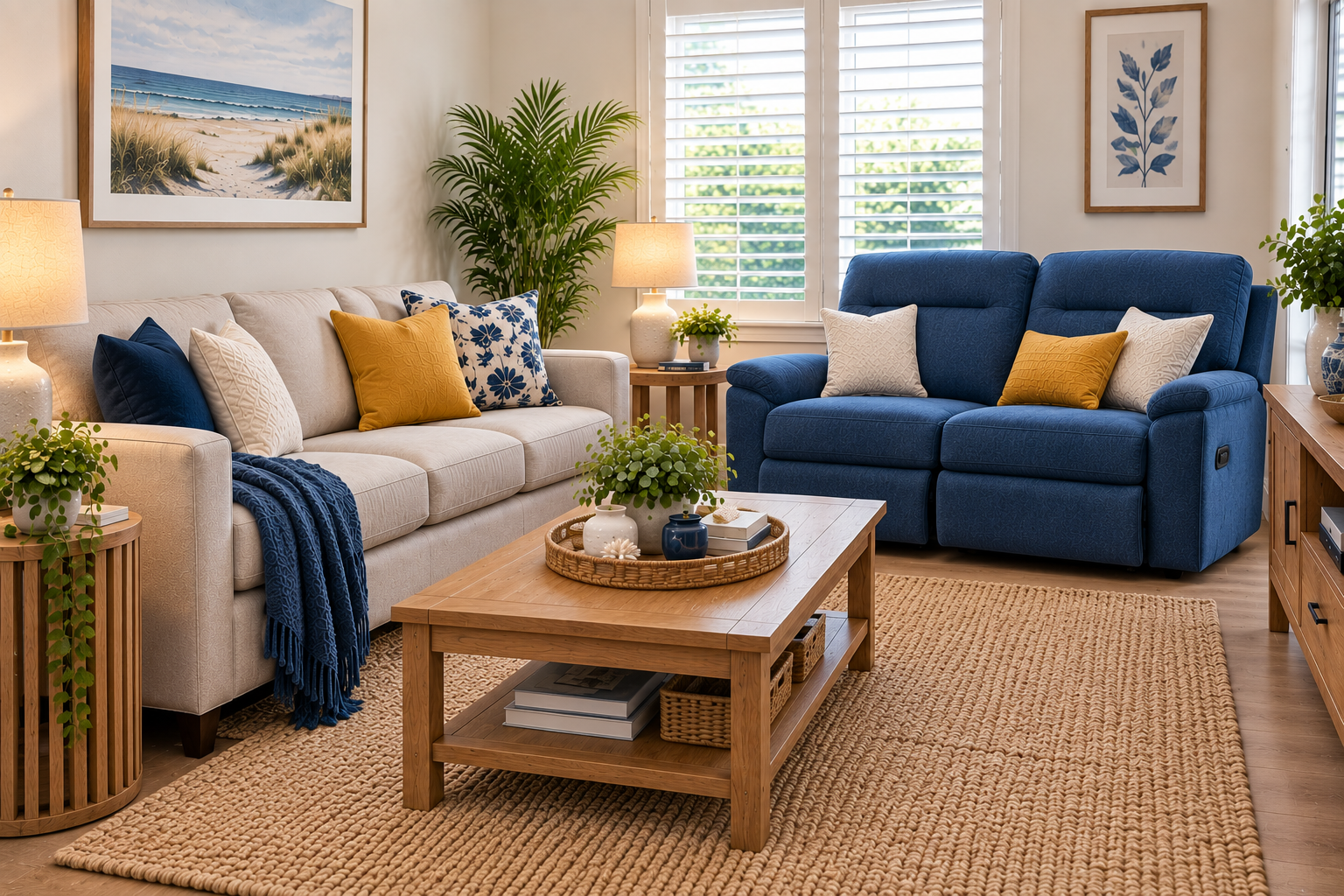
It's easy to focus on colour when trying to match furniture, but proportion is just as important.
You could find an occasional chair in exactly the right colour, but if it's much larger than everything else in the room, it may still look out of place.
Look at the overall scale of your existing furniture.
A large, deep lounge will generally work better with furniture that has enough visual weight to sit alongside it. On the other hand, smaller rooms and more compact furniture can quickly become overwhelmed by one oversized piece.
Also consider how much physical space you have.
Make sure there is enough room to comfortably move around the furniture, open recliners, pull dining chairs out and walk through the room without having to squeeze past things.
Sometimes the best-looking option in the showroom simply isn't the best size for the room at home.
7. Mixing Old and New Can Actually Look Better
Buying one new piece doesn't mean everything around it suddenly needs replacing.
An older timber dining table can look great with a newer set of chairs. An existing lounge might feel completely different once you introduce a new occasional chair and floor rug.
Even furniture from different styles can work together when there are common colours, proportions or finishes connecting them.
Homes naturally change over time.
Furniture gets replaced when it's needed, new pieces are added and sometimes a favourite piece stays around for years.
That's perfectly fine.
A comfortable home doesn't need to look like every piece of furniture arrived on the same truck on the same day.
8. Take Photos Before You Go Furniture Shopping
Here's one of the simplest things you can do before shopping for new furniture:
Take some photos of your room.
Stand back far enough to show the flooring, existing furniture and general layout.
It's also worth taking a few basic measurements — particularly the space where you're planning to put the new piece.
Having photos with you makes it much easier to look at a lounge, chair, dining setting or rug and imagine how it might work with what you already have.
It can also be useful when asking for another opinion in-store.
Instead of trying to explain that your floor is "sort of a medium timber colour" or your existing lounge is "a light grey-ish colour", you can simply show it.
You Don't Have to Start Again
Updating a room doesn't mean emptying it and starting from scratch.
Sometimes one carefully chosen piece is all that's needed.
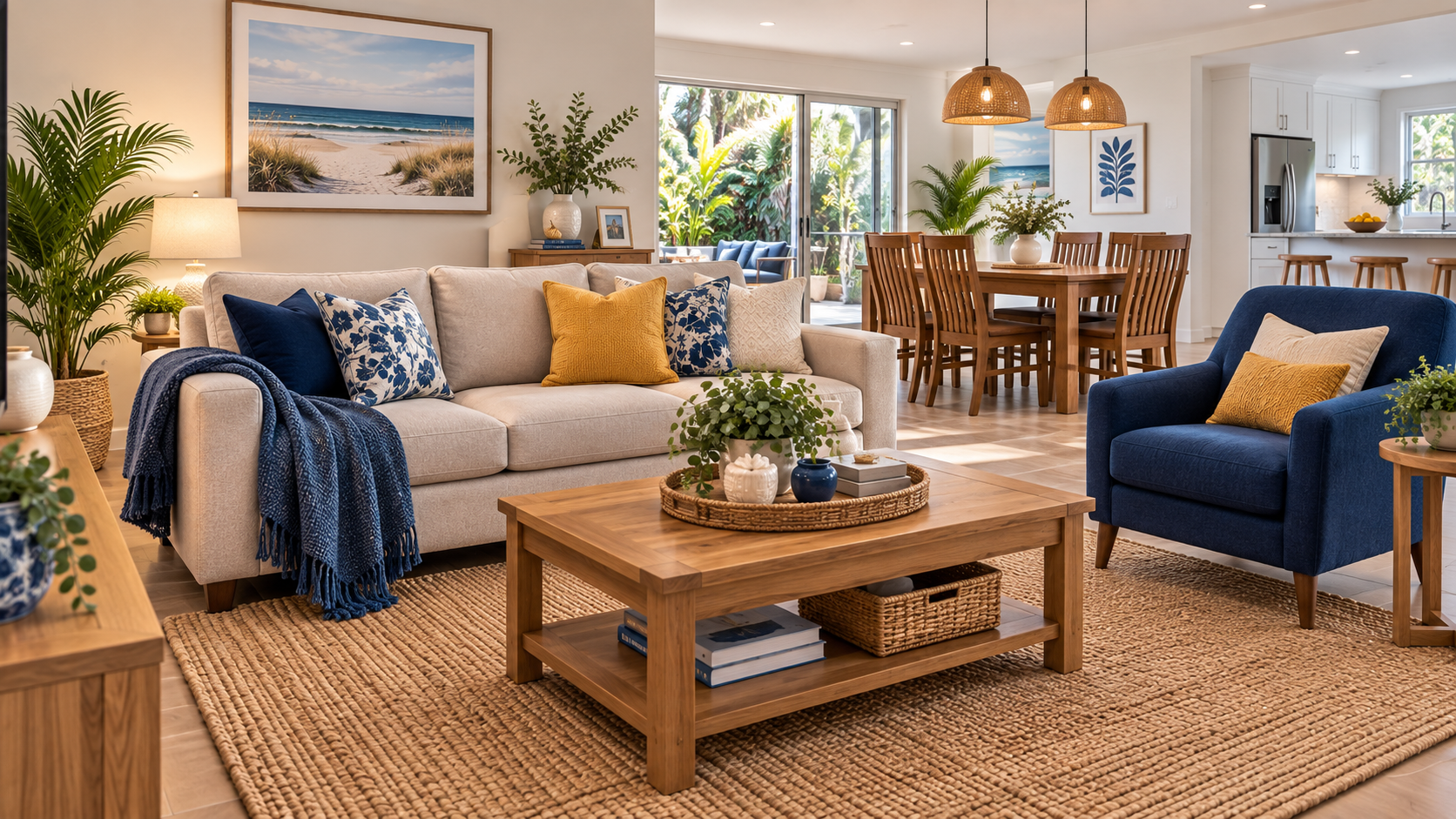
A new lounge can become the starting point for a refreshed living area. An occasional chair can introduce colour. A new dining setting can change the feel of an open-plan space. And the right floor rug can help bring old and new furniture together.
The aim isn't to make everything match.
It's to make everything work together.
If you're thinking about updating a room but aren't sure what will suit your existing furniture, flooring or space, take a few photos and measurements before you head out shopping.
Visit us at Ron Mahers Flooring & Furniture, 265 Alice Street, Maryborough, and have a look at the options in-store.