How to Make Your Bedroom Feel More Put Together
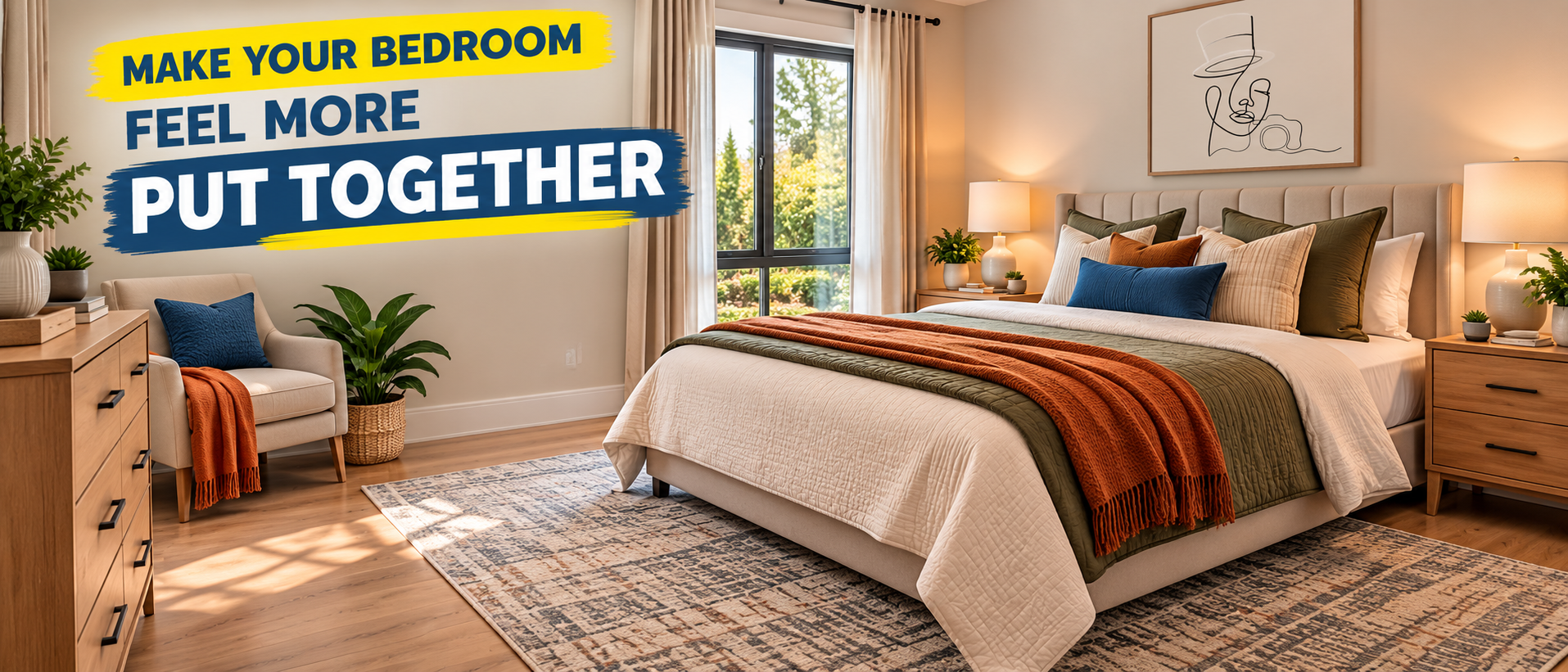
Some bedrooms just feel finished. It isn't necessarily because they've been completely renovated or filled with expensive furniture. In fact, you can have a good bed, bedside tables, nice flooring and plenty of décor and still feel as though something isn't quite right.
Often, the difference is simply how everything works together.
The proportions of the furniture, the colours around the room, what's happening on the floor and even the amount of empty space can all influence whether a bedroom feels considered or like a collection of separate pieces. The good news is you don't need to start again.
Here are some simple things to think about when you want your bedroom to feel a little more put together.
1. Start With the Bed
In most bedrooms, the bed is naturally the focal point. It's usually the largest piece of furniture in the room, so it makes sense to get its position and proportions right before worrying too much about everything around it.
Start by looking at where the bed sits. Can you comfortably walk around it? Can drawers and wardrobe doors still open properly? Is there enough space for bedside tables without squeezing them against the walls?
Then consider the size of the bed itself.
A king-size bed might sound appealing, but if it leaves very little room for anything else, a queen could create a much more comfortable bedroom overall.
The bedhead matters visually too. A substantial bedhead can help anchor the bed, while a very small one can sometimes feel out of proportion with a larger mattress.
And while we're talking about beds, don't forget what you can't see.
A bedroom can look fantastic, but your mattress still needs to be comfortable and suitable for you.
Style matters, but getting a good night's sleep matters more.
2. Your Bedside Tables Don't Have to Match Perfectly
There's something naturally pleasing about two matching bedside tables either side of a bed. But they're certainly not compulsory.
If you're working with furniture you already own, two slightly different pieces can still look deliberate. Look for something that connects them.
Perhaps they're made from similar timber. Maybe they're approximately the same height. They might be completely different designs but have matching lamps sitting on top.
The aim isn't necessarily perfect symmetry. It's visual balance.
Stand at the foot of the bed and look at the room as a whole. If one side feels considerably heavier, taller or busier than the other, a few small changes might be all that's needed.
3. Choose a Simple Colour Direction
One of the easiest ways to make separate pieces feel connected is through colour. That doesn't mean everything needs to match.
In fact, trying to use exactly the same colour everywhere can make a room feel overly coordinated.
Instead, choose a simple group of colours that work well together and repeat them subtly around the room.
For example:
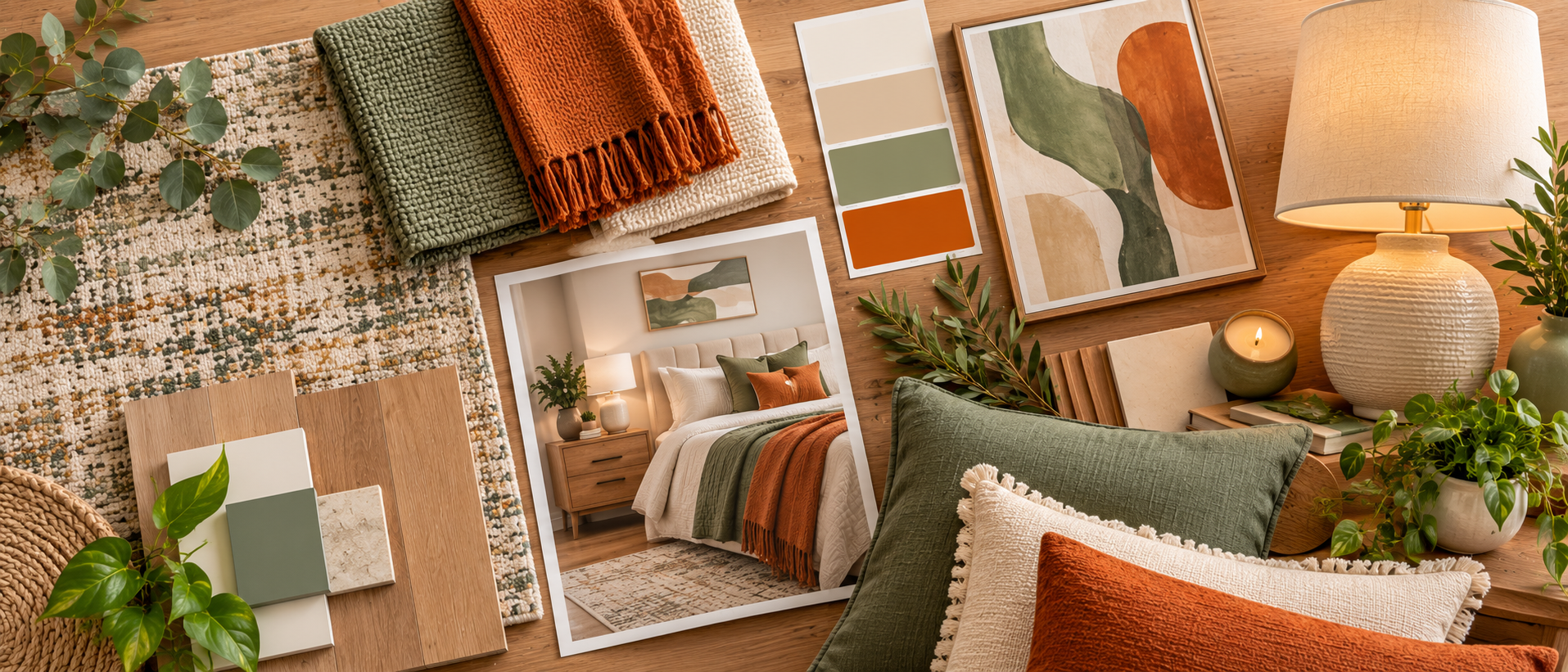
Warm timber + cream + sage green + burnt orange.
The timber might appear in the bed frame and bedside tables. Sage green might appear in a cushion and artwork. Burnt orange could be picked up in a throw and another small decorative piece.
None of those things need to be exactly the same shade. You're simply giving the eye little connections around the room.
If you already have something you love, (a bedhead, rug, artwork or even a favourite quit), use that as your starting point and build the rest of the colour palette around it.
4. Look at What's Happening Underfoot
It's easy to concentrate on the furniture and forget that the floor is one of the largest surfaces in the bedroom. It has a big influence on how the room looks and feels.
Carpet can bring softness and warmth to a bedroom and can help create a cosy feel underfoot.
Plank flooring creates a different look and can work particularly well when you're continuing the same flooring from an adjoining hallway into the bedroom. Neither option is automatically better.
The important question is how the flooring works with everything else in the room.
Consider the colour of your furniture, bedhead, walls and bedding. If you have timber bedroom furniture and timber-look flooring, for example, the two don't necessarily need to be an exact match. Sometimes a little contrast between the timber tones actually works better.
Look at the whole room rather than choosing each element separately.
5. If You Use a Rug, Get the Size and Position Right
A floor rug can completely change the feel of a bedroom. It adds colour, texture and softness, but it can also visually anchor the bed within the room.
The important part is getting the proportions right.
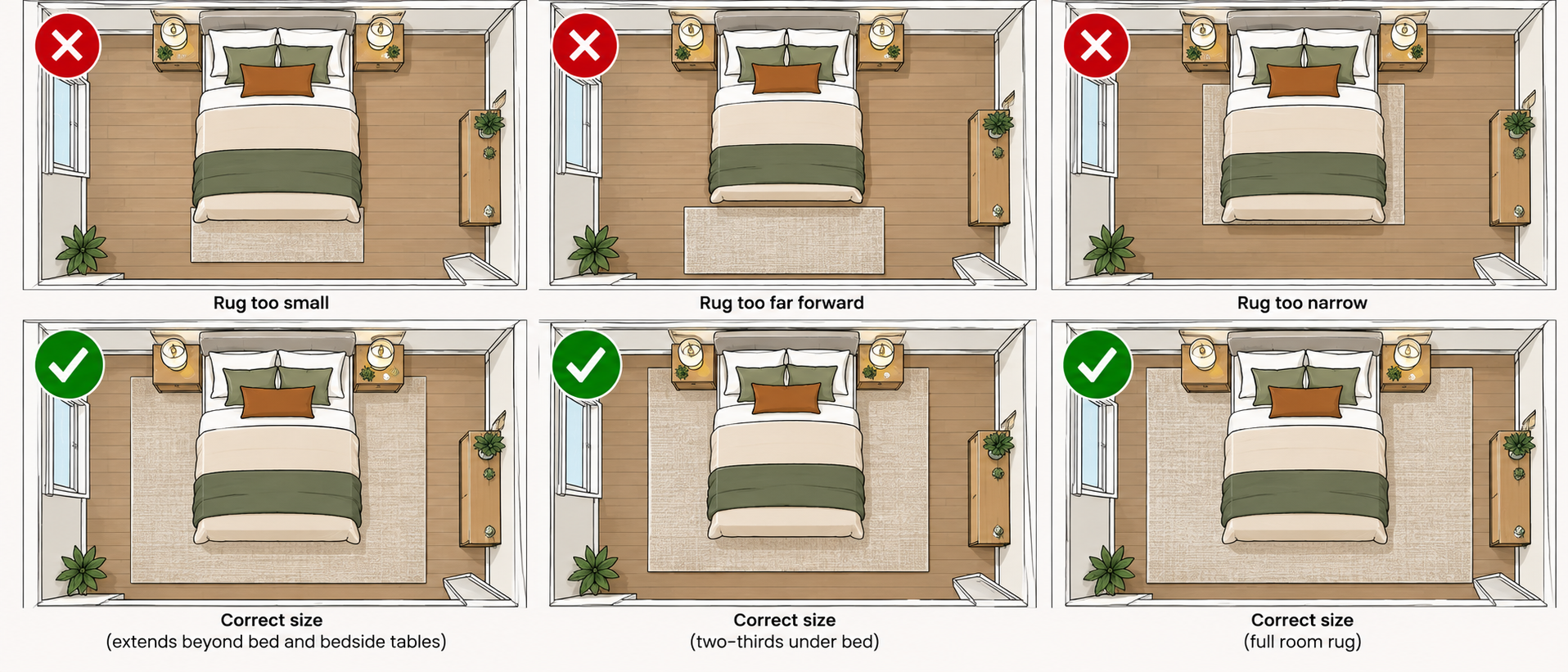
A very small rug sitting at the foot of a large bed can sometimes look disconnected from everything around it.
One option is to use a larger rug underneath the lower portion of the bed, allowing it to extend beyond both sides and the foot. That visually connects the bed and rug rather than making them look like separate elements.
In a smaller bedroom where a large rug isn't practical, runners positioned beside the bed can also add softness without taking over the room.
As with the furniture, choose the rug according to the space rather than simply choosing the rug you like in isolation.
6. Don't Forget the Wall Behind the Bed
Once you've sorted out the bed and bedside furniture, take a look at what's happening above them. The wall behind the bed is often one of the largest uninterrupted surfaces in the room. And sometimes it's the reason a bedroom feels unfinished.
That doesn't mean you need to fill it.
One appropriately sized piece of artwork can have far more impact than several small pieces scattered across the wall. A pair of coordinated artworks can work well too.
Alternatively, the bedhead itself might provide enough visual interest that very little else is required. Again, proportion matters.
A tiny picture sitting by itself above a large queen or king bed can easily look lost.
Whatever you choose, try to make it feel connected to the bed below rather than something that's simply been placed on an empty wall.
7. Use Different Textures Rather Than More Stuff
When a room feels as though it's missing something, the natural reaction is often to add something else.
Another cushion.
Another ornament.
Another picture.
Another piece of furniture.
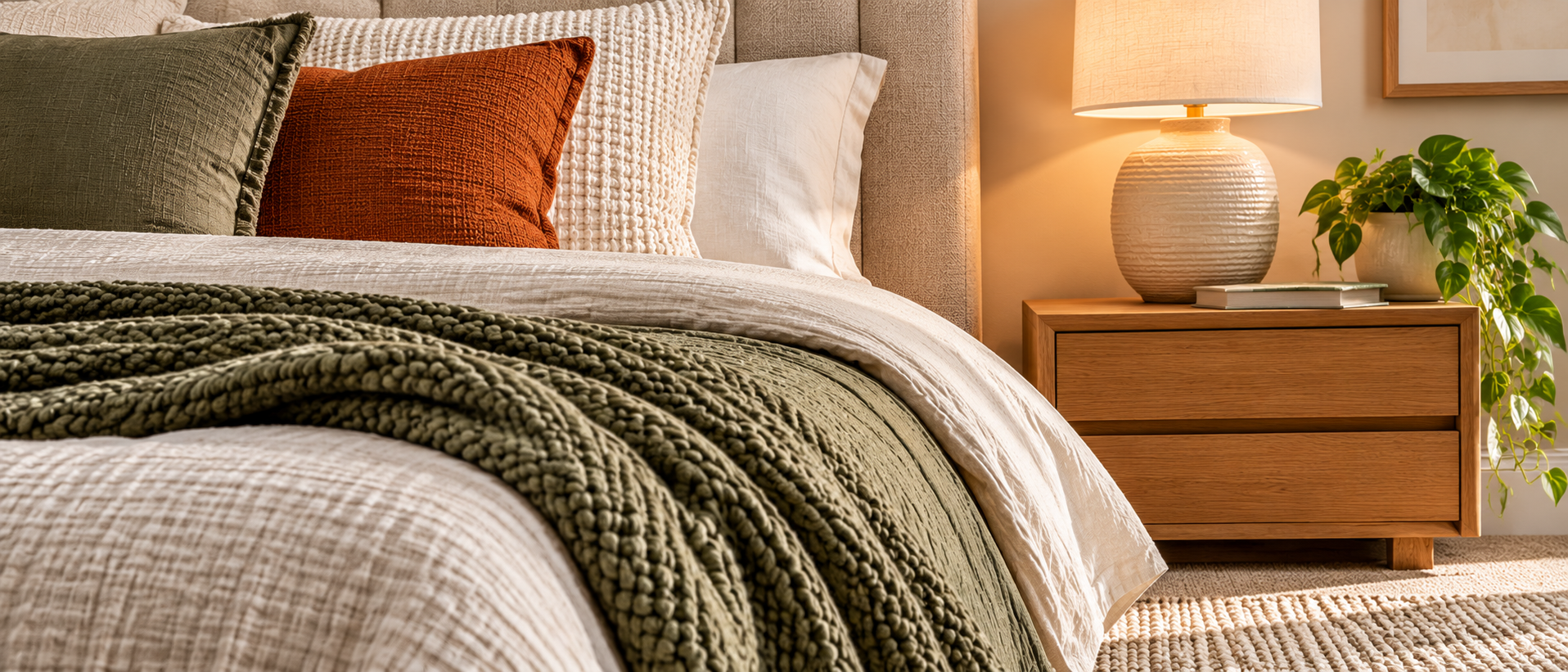
But sometimes what the room needs isn't more stuff. It needs more variation in texture.
Think about the different materials already in the bedroom.
You might have:
Soft carpet.
Timber furniture.
An upholstered bedhead.
Linen bedding.
A knitted throw.
A woven rug.
Even when they're all relatively neutral in colour, those different textures stop the room from feeling flat. This is particularly useful if you prefer a simple or neutral bedroom.
You don't necessarily need lots of bold colours to create interest when the materials themselves provide plenty of variation.
8. Give Larger Furniture Some Breathing Room
Bedrooms can accumulate furniture surprisingly quickly.
There's the bed and bedside tables.
Then perhaps a tallboy.
A dresser.
A chair in the corner.
A blanket box at the foot of the bed.
Another storage cabinet because there happened to be an empty wall.
Eventually, there's furniture everywhere.
Before adding another piece, ask whether you actually need it. Empty space isn't something that has to be fixed.
Leaving part of a wall clear or having some open floor area around the bed can actually make the furniture you do have look better.
This becomes particularly important in smaller bedrooms. Removing one unnecessary piece can sometimes make a bigger difference than adding three decorative ones.
9. Pay Attention to Furniture Height
We often think about furniture in terms of width and depth, but height can be just as important. Bedside tables are a good example.
If they're dramatically higher or lower than the top of the mattress, they can look slightly awkward beside the be, and may not be particularly convenient to use.
The same applies to other bedroom furniture.
A very tall, heavy chest of drawers positioned close to a low-profile bed might visually dominate the room. That doesn't mean every piece has to line up perfectly.
It simply means looking at how the proportions of different pieces relate to each other.
Sometimes furniture that looks fantastic by itself doesn't work quite as well once it's sitting beside something of a completely different scale.
10. Finish With a Few Intentional Details
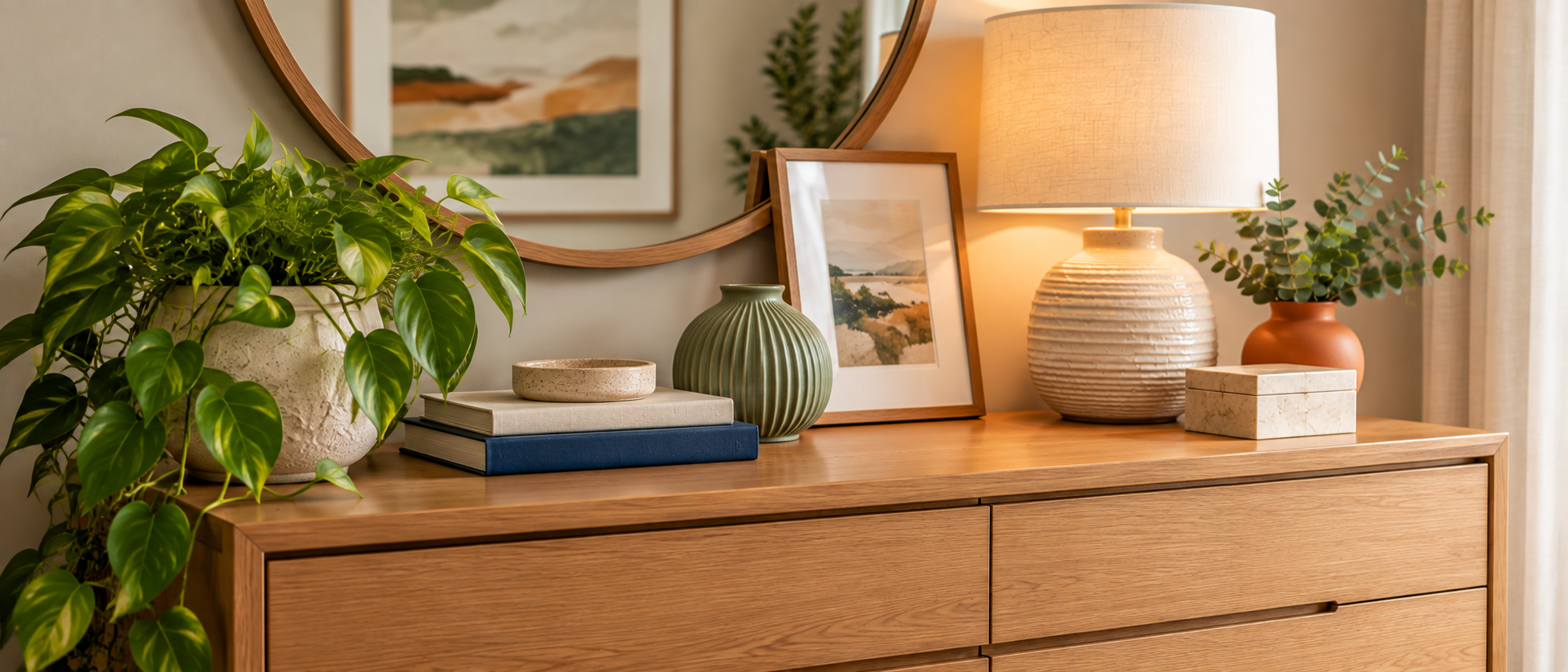
This is where you can give the bedroom some personality.
But you don't need much.
A bedside lamp.
A plant.
A throw across the end of the bed.
Two or three cushions.
A piece of artwork.
Perhaps a simple tray or decorative item on a tallboy.
The important thing is that these pieces feel intentional rather than being added simply because there was an empty surface. And don't be afraid to remove something.
If a bedside table has a lamp, books, photo frames, candles, a plant and several ornaments on it, taking a few things away might actually make the remaining pieces stand out more.
A bedroom should still feel like somewhere you can relax.
It Doesn't Have to Be a Matching Bedroom Suite
Making your bedroom feel put together doesn't mean buying everything from the same furniture range. And it certainly doesn't mean replacing perfectly good furniture just because it doesn't match exactly.
Start with the important pieces.
A comfortable bed and mattress. Furniture that suits the size of the room. Flooring that works for the space.
Then look for simple ways to connect everything through colour, proportion and texture.
If you're refreshing your bedroom, bring a few photos and measurements with you when you visit us at Ron Mahers Flooring & Furniture. We can help you look at mattresses, furniture, flooring and rugs that work with what you already have… not just what looks good by itself in the showroom.
Because a bedroom doesn't need more things to feel finished.
Sometimes it just needs the right things working together.