Furniture for Smaller Rooms: How to Get the Most Out of Your Space
A smaller room doesn't have to feel cramped.
Whether you're furnishing a unit, downsizing, working with a smaller living room or simply trying to make better use of the space you have, the furniture you choose can make a big difference.
And the answer isn't necessarily to buy the smallest furniture you can find.
In fact, filling a room with lots of small pieces can sometimes make it feel more cluttered than choosing a few well-proportioned pieces that properly suit the space.
The key is finding the right balance between comfort, practicality and leaving enough room to move.
Here are some things to think about before choosing furniture for a smaller room.
1. Measure the Room Before You Shop
Before looking at furniture, start with the room itself.
Measure the length and width, but don't stop there. Take note of doorways, windows, built-in cupboards, power points and anything else that affects where furniture can be positioned.
Think about how doors open and which areas need to remain clear.
It's also worth considering the natural pathways through the room. If you regularly walk through the living room to reach the kitchen or back door, that space needs to remain usable once the furniture is in place.
If you've found a lounge you like, try marking its dimensions on your floor with masking tape.
Seeing the actual footprint can be much more useful than trying to imagine what a measurement on a price tag will look like in your home.
2. Choose the Right Lounge.. Not Necessarily the Smallest One
The lounge is usually the largest piece of furniture in a living room, so getting this choice right can make everything else easier.
But don't automatically assume that a small room needs a tiny lounge.
Sometimes one comfortable, appropriately sized two or three-seater makes better use of the space than trying to fit several smaller chairs around the room.
Look beyond the number of seats as well.
Two three-seater lounges can have quite different overall dimensions. Wide arms, deep seats and bulky designs can add considerably to the amount of floor space a lounge occupies.
Think about how many people regularly use the room and choose your seating around that rather than trying to fill every available wall.
3. Be Careful With Recliners in Small Spaces
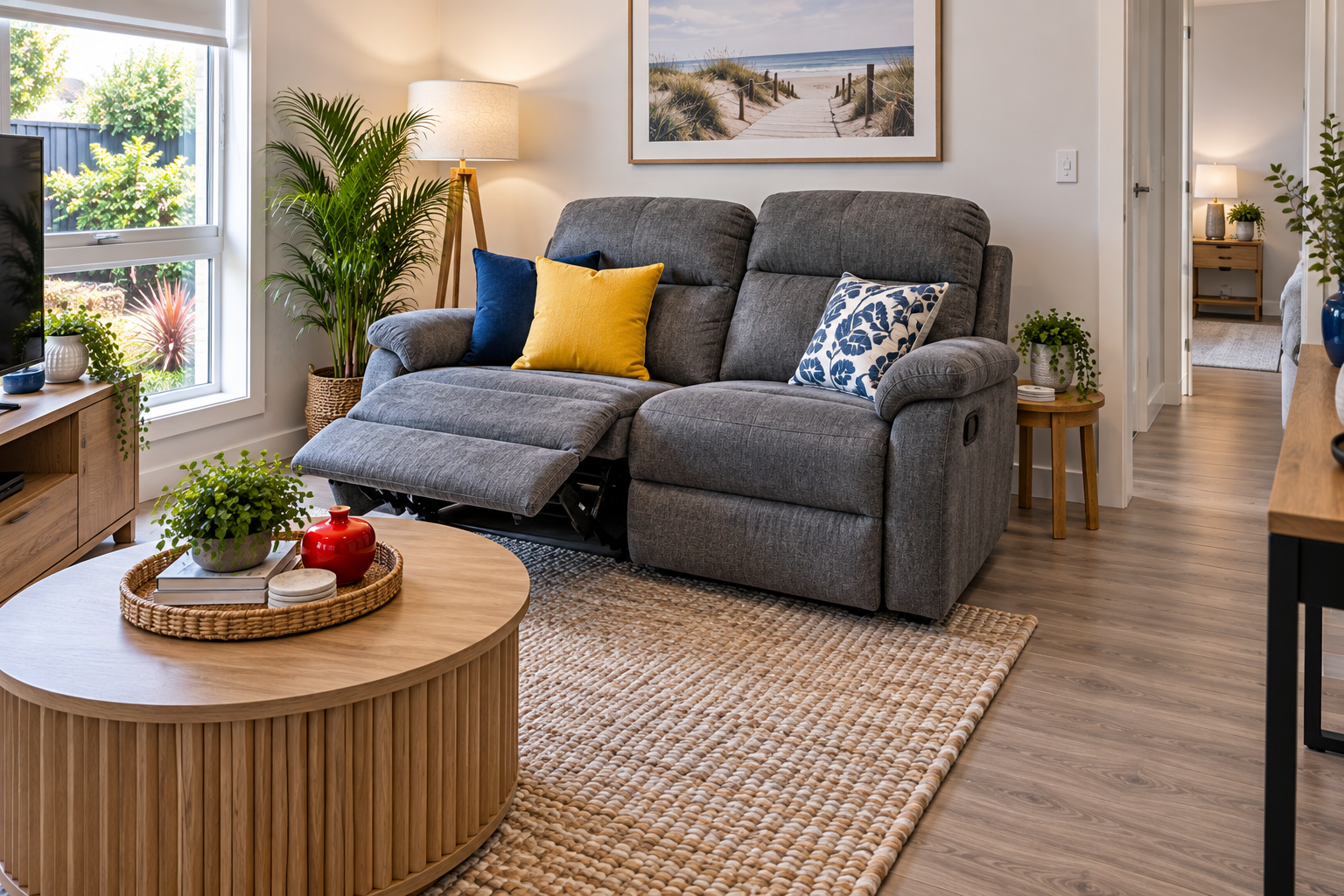
Recliners can be a great choice when comfort is important, but there's one measurement that's easy to overlook:
How much room does the recliner need when it's open?
The dimensions you see when a recliner is sitting upright aren't necessarily the dimensions it needs when you're actually using it.
Depending on the design, you may need additional clearance behind or in front of the chair.
This becomes particularly important with double recliners and reclining lounges.
Before buying, think about where the recliner will sit, how it operates and whether someone can still comfortably walk through the room while it's being used.
A recliner can certainly work in a smaller space, it just needs to be planned for.
4. Don't Fill Every Empty Space
When furnishing a room, there's often a temptation to put something everywhere.
An empty corner gets a chair. An empty wall gets a cabinet. There's room beside the lounge, so another side table goes there.
Before long, there's furniture around almost the entire perimeter of the room.
Empty space isn't wasted space.
Leaving some floor area visible can make a room feel more open and give you more room to move.
Instead of trying to fit a lounge, two occasional chairs, a coffee table, two side tables and additional storage into a compact living room, consider what you actually use.
Perhaps a lounge, one chair and a smaller occasional table are all you really need. A room can still feel complete without every available space being occupied.
5. Choose Occasional Furniture Carefully
Coffee tables and side tables might be much smaller than your lounge, but they can still have a big impact on how spacious a room feels. A large rectangular coffee table, for example, can take up valuable space in the centre of a small living area.
Consider whether a smaller table would do the same job.
Round tables can also work particularly well where space is tight because they don't have corners projecting into walkways.
Nesting tables can be another practical option. They can be separated when you need additional surface space and tucked together when you don't.
And ask yourself whether you actually need every piece.
If one side table works perfectly well, there may be no reason to have one at each end of the lounge simply because that's traditionally how a room is arranged.
6. Think About Traffic Flow
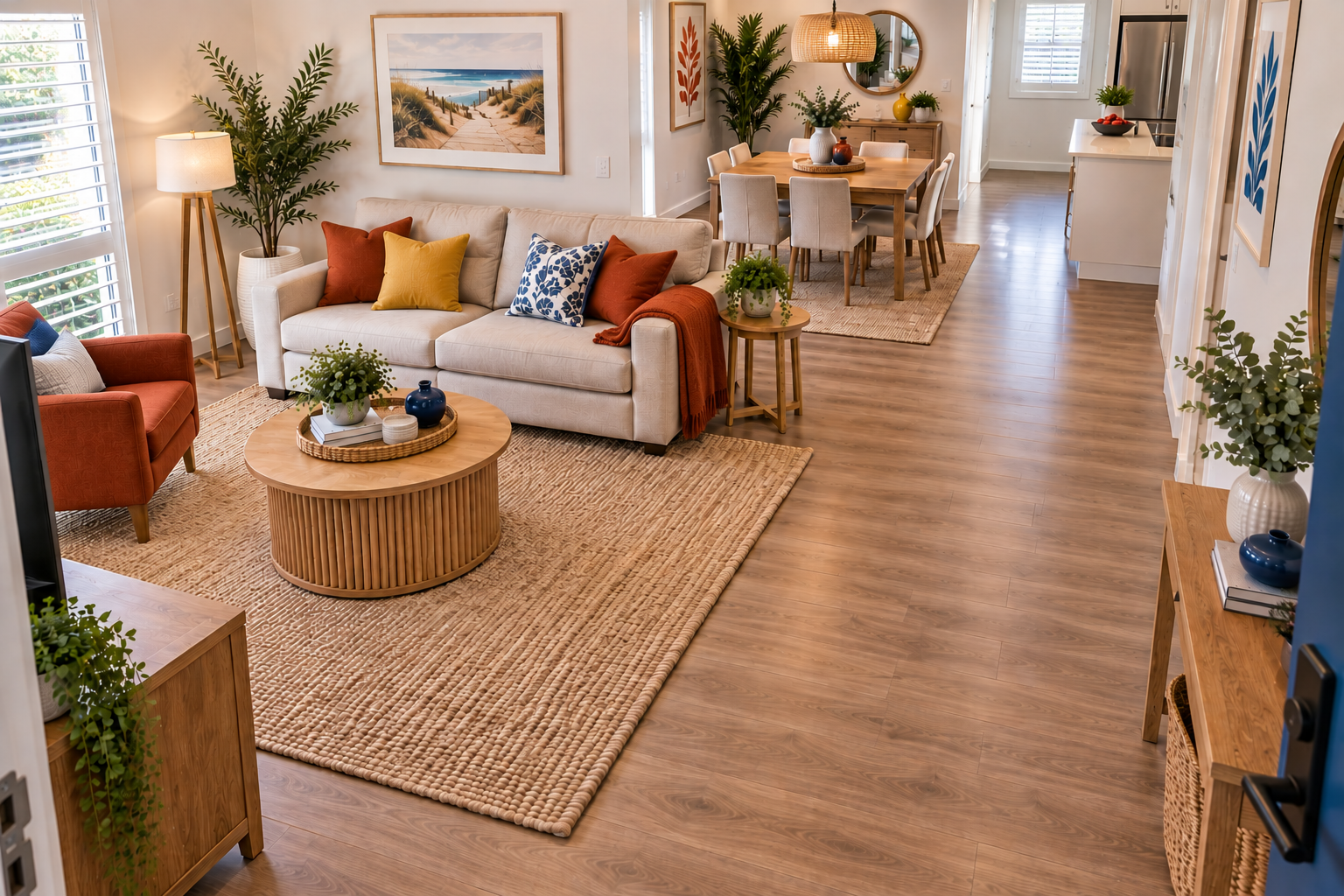
It's easy to concentrate on how furniture looks from one particular angle.
But you also have to live in the room.
Think about the routes you naturally take through the space.
Can you comfortably walk from the hallway to the kitchen? Can you get to an outside door without weaving between furniture? Can someone walk past while another person is sitting in a recliner?
If you have to constantly move around a coffee table or squeeze between a chair and the wall, the furniture arrangement probably isn't working as well as it could.
Sometimes moving or removing just one piece can completely change how spacious a room feels.
7. Use a Floor Rug to Define the Space
Floor rugs aren't only decorative. They can also help visually define an area, which can be particularly useful in smaller open-plan homes.
A rug underneath your lounge setting can establish the living area without needing cabinets, screens or additional furniture to separate it from the dining space.
But size matters here too.
A very small rug sitting in the middle of the furniture can sometimes make the setting feel disconnected.
An appropriately sized rug helps visually group the lounge, chairs and occasional furniture together so they read as one setting.
That can make even a compact living area feel more organised and intentional.
8. Don't Forget About Visual Weight
Furniture doesn't only take up physical space. It also takes up visual space.
Two lounges could have very similar measurements but look completely different once they're in the same room.
A lounge with very wide arms, a heavy base and deep cushions may have a much stronger presence than one with cleaner lines and a little visible space underneath.
That doesn't mean you need to avoid larger, darker or more substantial furniture in a small room.
A royal blue recliner or a darker lounge, for example, can make a fantastic feature. It's about balance.
If you choose one visually strong piece, giving it some breathing room rather than surrounding it with lots of other substantial furniture can help the room feel comfortable rather than crowded.
9. Small Dining Areas Need the Same Thinking
The same principles apply to dining furniture. Start by thinking about how many people actually use the table on a regular basis.
If there are normally two or four people sitting at the table, do you need an eight-seater taking up most of the dining area because you occasionally have visitors?
Maybe you do, but it's worth considering the trade-off. And don't measure only the dining table.
Dining chairs need space too.
There needs to be enough room to pull the chairs away from the table and comfortably sit down without hitting a wall, kitchen bench or another piece of furniture.
A dining setting that looks as though it fits perfectly when all the chairs are tucked underneath may feel very different once everyone sits down.
10. Take Photos and Measurements Shopping With You
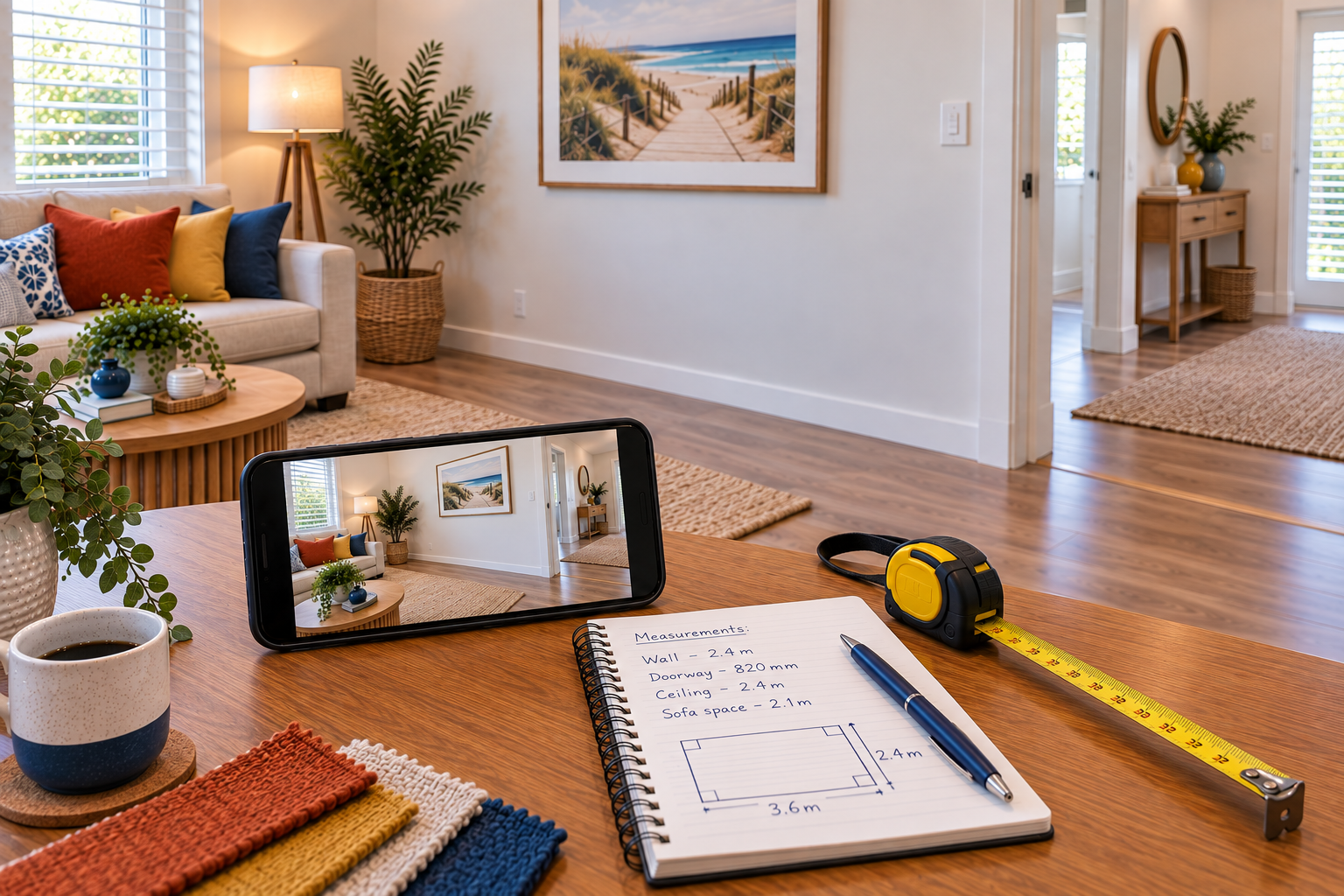
You don't need a professionally drawn floor plan before going furniture shopping.
A few measurements and photos on your phone can make a big difference.
Take some wide photos that show the entire room and the furniture that's already there.
Then note the dimensions of any areas you're trying to fill.
If there's a doorway, narrow hallway or tight entrance that new furniture will need to pass through, measure that too.
Having this information with you makes it much easier to look at furniture and decide whether something is realistically going to work in your home.
It's certainly easier than getting home and trying to remember whether that empty wall was two metres wide or roughly two metres wide.
Make the Space Work for You
Having a smaller room doesn't mean giving up comfort or choosing furniture you don't really want. It simply means making every piece count.
Choose furniture that's appropriately sized, allow enough room to comfortably move around it and don't feel that every empty space needs to be filled. Sometimes fewer, better-chosen pieces will make a small room feel bigger, more comfortable and more useful than a collection of smaller furniture squeezed into every available spot.
And remember, you don't have to work it all out before you start looking.
Take a few photos of your room, jot down some basic measurements and bring them with you when you visit us at Ron Mahers Flooring & Furniture. We can help you look at the options and work out what might suit your space, rather than simply what fits on the showroom floor.
Sometimes, getting the most out of a smaller room isn't about finding more space.
It's about making better use of the space you already have.