What Should You Replace Before Moving Into a New Home… And What Can Wait?

You’ve got the keys. The house is empty. Moving day is getting closer.
There’s probably already a long list of things you’d like to change. Some might happen straight away, while others can wait until you’ve lived in the house for a while.
But before the beds, lounges, dining table, boxes and everything else start coming through the front door, there’s one question worth asking:
Is there anything you’ll wish you had changed while the house was empty?
Flooring should be fairly high on that list.
Not because every new home needs new flooring. It doesn't. But because if you already know the carpet or flooring needs to go, there may never be an easier time to replace it.
Here are seven things worth considering before moving day.
1. Start With the Floors. You May Not Get a Better Opportunity
If you're considering replacing the flooring, an empty house is about as convenient as it gets.
There are no beds to dismantle, lounges to shift, dining tables to move or rooms that need to be cleared before work can begin.
Installers have clear access, existing flooring can be removed without working around furniture, and you're not trying to live in the house while the work is happening.
Compare that with replacing flooring a year after moving in.
By then, every room is furnished. Cupboards are full. There are televisions, bookshelves, beds, rugs and everything else that gradually finds its place in a home.
It can still be done, of course. Flooring is replaced in occupied homes every day.
However, if you're already standing in an empty house thinking, "We'll probably replace this flooring eventually," it's worth considering whether eventually should actually be now.
That doesn't mean ripping out perfectly good flooring just because you've bought the house. If you like it, it's in good condition and it suits the way you intend to use the home, leave it alone.
The important thing is making the decision while you have the opportunity.
2. Decide Whether the Existing Flooring Is Something You Can Live With
Not every floor that looks a little dated needs to be replaced.
Before making a decision, walk through the house room by room and look beyond the colour or style.
Start with condition.
Are there obvious worn areas through hallways and doorways? Is the carpet stained or carrying an odour? Are there damaged, lifting or poorly repaired sections? Are some areas noticeably more worn than others?
Then think about practicality.
Perhaps the previous owners had carpet somewhere you'd prefer a hard floor. Maybe there are several different flooring types through connected living areas and you'd prefer something more consistent.
And then there's appearance.
Flooring covers a large percentage of the visible surface of a home. If you strongly dislike it, changing it can completely alter how the house feels without changing the kitchen, knocking down walls or undertaking a major renovation.
Try to separate "It's not what I would have chosen" from "I know I'm going to replace this."
If it's the first, you might want to live with it for a while.
If it's the second, doing it before moving in deserves serious consideration.
3. If You're Replacing Carpet, Seriously Consider Doing It Before Moving Day
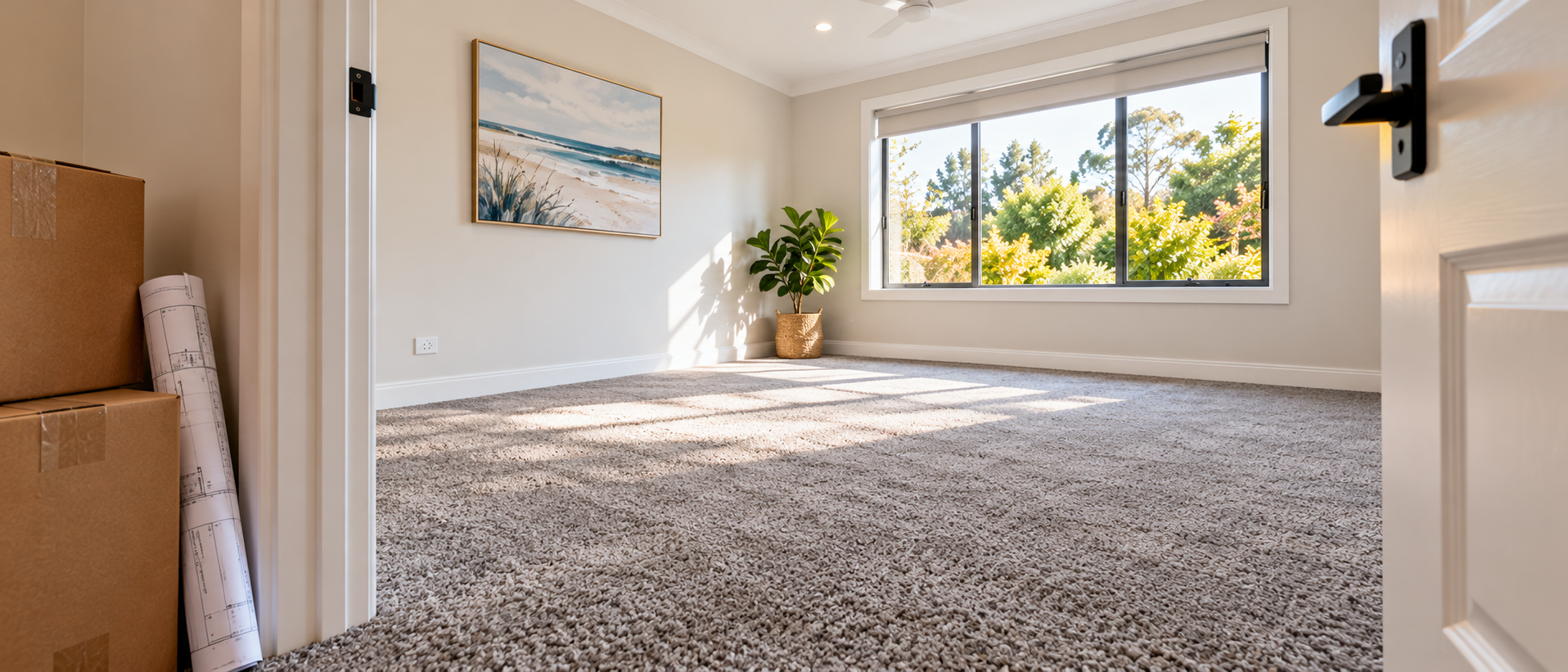
Carpet is probably the clearest example of something that's considerably easier to replace in an empty home.
Think about a typical bedroom.
Once you've moved in, there could be a bed, bedside tables, chest of drawers and other furniture that all needs to be dealt with before the carpet can be replaced.
Right now? It's an empty room.
There can also be another reason new homeowners choose to replace existing carpet. You're inheriting someone else's carpet.
Even when it's been cleaned, older carpet can have staining, wear or lingering odours from pets, smoking, spills and years of everyday life.
For some buyers that doesn't matter at all. A professional clean might be all that's needed.
For others, particularly when the carpet is already approaching the end of its useful life, replacing it before moving in provides a genuine fresh start.
There's something quite different about moving your furniture into a room knowing the carpet underneath it is already clean, fresh and yours.
And once the bed is assembled on top of it, you don't have to think about moving it again.
4. Think About More Than One Room at a Time
Even if you're only planning to replace flooring in one part of the house initially, take a moment to consider the whole home.
You don't necessarily need to do everything at once. It is suggested, however, to have an idea of where you're heading.
For example, imagine replacing the flooring in your lounge now and deciding six months later that you'd like the same product through the adjoining hallway and dining area.
Will that flooring still be available?
Will there be differences between batches?
Where will the joins or transitions occur?
Would it have looked better to run the flooring continuously through those spaces?
These are much easier questions to answer before the first section is installed.
Walk through the home and look at how the rooms connect.
You might decide to carpet all the bedrooms now but leave the living areas alone. Or perhaps the bedrooms are perfectly fine, but you'd like one continuous hard floor through the lounge, dining area and hallway.
The answer will be different for every home. The important thing is to have an overall flooring plan, even if you intend to complete it in stages.
That can save you from making a decision in one room that creates a problem in the next.
5. Don't Forget About What Might Be Under the Existing Floor
One advantage of allowing some time for flooring work before moving in is that you have a little breathing room if something unexpected is discovered.
You don't always know exactly what's underneath existing flooring until it comes up.
There may be uneven areas that need attention, old adhesive, damaged underlay or sections of the subfloor that require preparation before the new flooring can be installed.
Depending on the property, moisture may also need to be investigated.
This doesn't mean you should expect to find problems. It simply means that flooring isn't always a matter of pulling up the old product and immediately putting down the new one.
Proper preparation matters.
And if preparation is required, it's much easier to deal with while the room is empty than when the removalist is arriving tomorrow morning with a truck full of furniture.
If you're planning new flooring before moving in, try to leave enough time between getting access to the property and moving day rather than squeezing everything into the final afternoon.
A little breathing room can make the whole process much easier.
6. What Else Is Worth Doing Before the Furniture Arrives?

Flooring isn't the only job that's easier in an empty house. Painting is another obvious one.
If you already know the bright purple bedroom is going to become off-white, doing it before there's a bed and furniture against every wall makes sense.
A thorough clean is also much easier before your belongings arrive, particularly inside cupboards, wardrobes and other areas that will soon be full.
Minor repairs, electrical work and other jobs that require access to walls or floors can also be worth considering.
The important thing is to think about the order in which everything happens.
If you're painting and replacing flooring, for example, you probably don't want ladders, paint tins and renovation work unnecessarily taking place over your brand-new floor.
If several trades or jobs are involved, work out the sequence before booking everything.
A few minutes spent planning the order can prevent a lot of frustration later.
7. What Can Usually Wait Until After You Move In?
Here's where we'd actually encourage you not to rush.
You don't need to have every room perfectly finished before moving day.
Furniture can wait.
Rugs can wait.
Artwork, lamps, cushions and decorative pieces can definitely wait.
In fact, living in the house for a little while can help you make better decisions about many of these things.
You might discover that the lounge works better on the opposite wall.
The room you thought needed a large dining table might actually suit something smaller.
A corner you hadn't given much thought to might get beautiful morning light and become the perfect spot for a chair.
You won't necessarily know these things during a 20-minute inspection before buying the property. Some decisions become easier once you've actually lived there.
That's why we'd divide your list into two categories.
Do before moving: jobs that are messy, disruptive or significantly easier when the house is empty.
Do after moving: things that benefit from understanding how you actually use the home.
Flooring will often fall into the first category.
Furniture and finishing touches will often fall into the second.
Before the Moving Truck Arrives, Look Down
Buying a home comes with plenty of decisions, and it's very easy to feel like everything needs to be done immediately.
It doesn't.
If the flooring is in good condition and you like it, there may be absolutely no reason to replace it.
But if you've already walked through the house thinking, "That carpet has to go," or "We definitely want new flooring through here," don't automatically put it on the list for next year.
You currently have something that's surprisingly difficult to recreate once you've moved in:
An empty house.
Use that opportunity wisely.
Get the disruptive jobs out of the way, move into a home that's ready to live in, and take your time deciding on the things that can easily be changed later.
If you've recently bought a home in Maryborough or the surrounding area and you're wondering whether it's worth replacing the flooring before you move in, come and have a chat with us at Ron Mahers Flooring & Furniture.
Bring in your house plans, measurements or even a few photos of the existing floors. We can help you look at the different options, work out which areas make sense to tackle together and choose flooring that suits the way you plan to use your new home.
Because if the flooring needs to be done anyway, before the furniture arrives might just be the best time to get it done.