One Room, One Weekend: Small Changes That Can Make a Big Difference
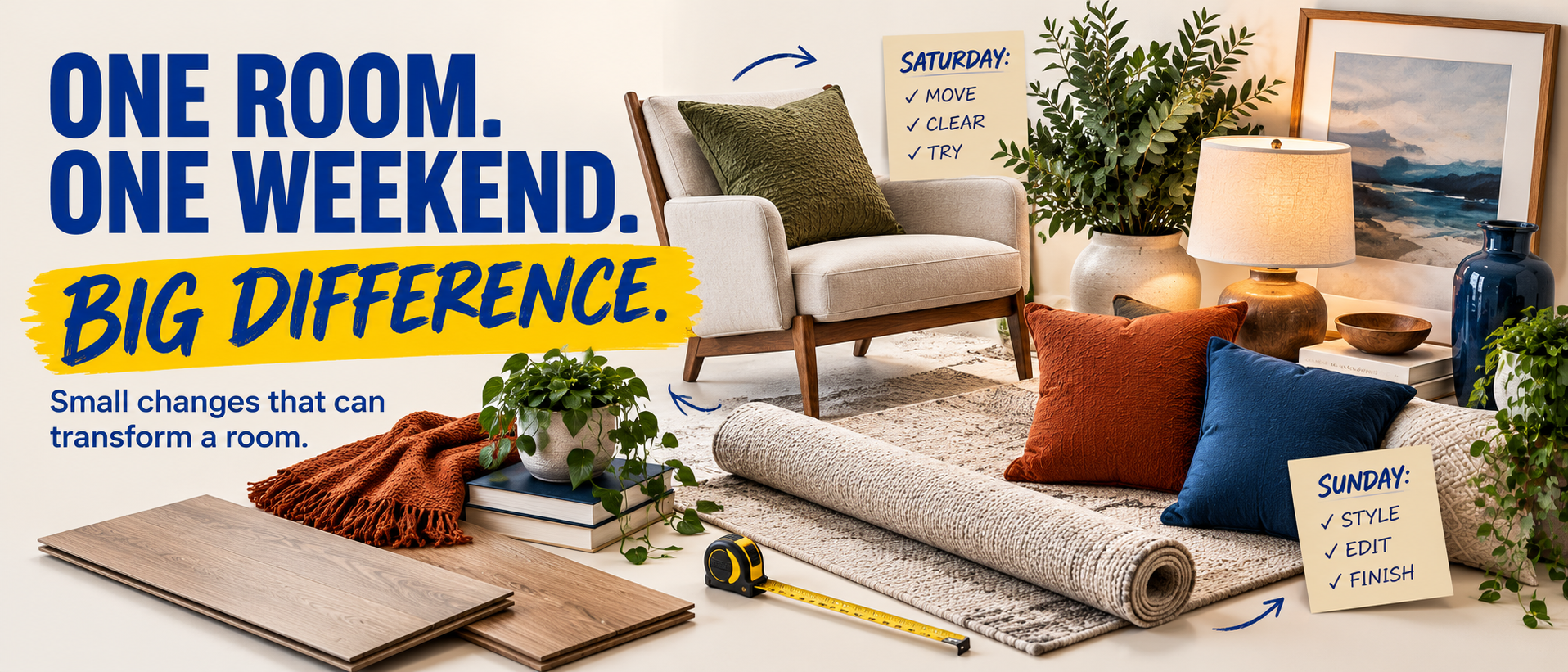
Sometimes you don't need a renovation. You don't need to replace every piece of furniture, pull up the flooring or completely change the style of your home.
Sometimes a room just needs a little attention.
The problem is that once you start looking around the house, it's easy to see everything you'd like to change at once. The lounge room feels tired. The dining area could work better. The spare room has slowly become a storage room. The bedroom could do with a refresh.
Instead of tackling the whole house, try something simpler.
Choose one room. Give yourself one weekend. And see how much difference a handful of considered changes can make.
The aim isn't to create a completely different room by Sunday afternoon. It's to make the room you already have look better, feel better and work better.
1. Friday Night: Take Everything In Before You Take Anything Out
Before moving a single piece of furniture, stand at the doorway and look at the room properly. Better still, take a photo.
We spend so much time in our homes that we become accustomed to things being where they are. The chair that's always been in the corner stays there because that's where it's always been. The side table nobody really uses becomes part of the scenery.
A photograph can help you look at the room with fresh eyes.
Ask yourself:
What feels crowded?
Where does clutter naturally collect?
Which furniture do we actually use?
What do I still really like?
What isn't working?
Take some basic measurements while you're there, particularly if you suspect a piece of furniture or rug might be the wrong size.
Most importantly, don't begin the weekend by asking: “What should I buy?”
Start by asking: “What could this room do better?”
2. Saturday Morning: Clear the Room Back
You don't necessarily need to empty the entire room. Start with the smaller things.
Take the cushions and throws off the lounge. Clear the coffee table and sideboard. Remove small decorative items, magazines, baskets and anything else that's accumulated over time.
If there's something sitting in the room that actually belongs somewhere else, move it. You'll probably find things you haven't really noticed for months.
Once the room is cleared back, give everything a proper clean…. Then stop.
Don't automatically put everything back where it was. One of the easiest ways to change a room is to give yourself permission not to return everything to it.
3. Try a Different Furniture Layout
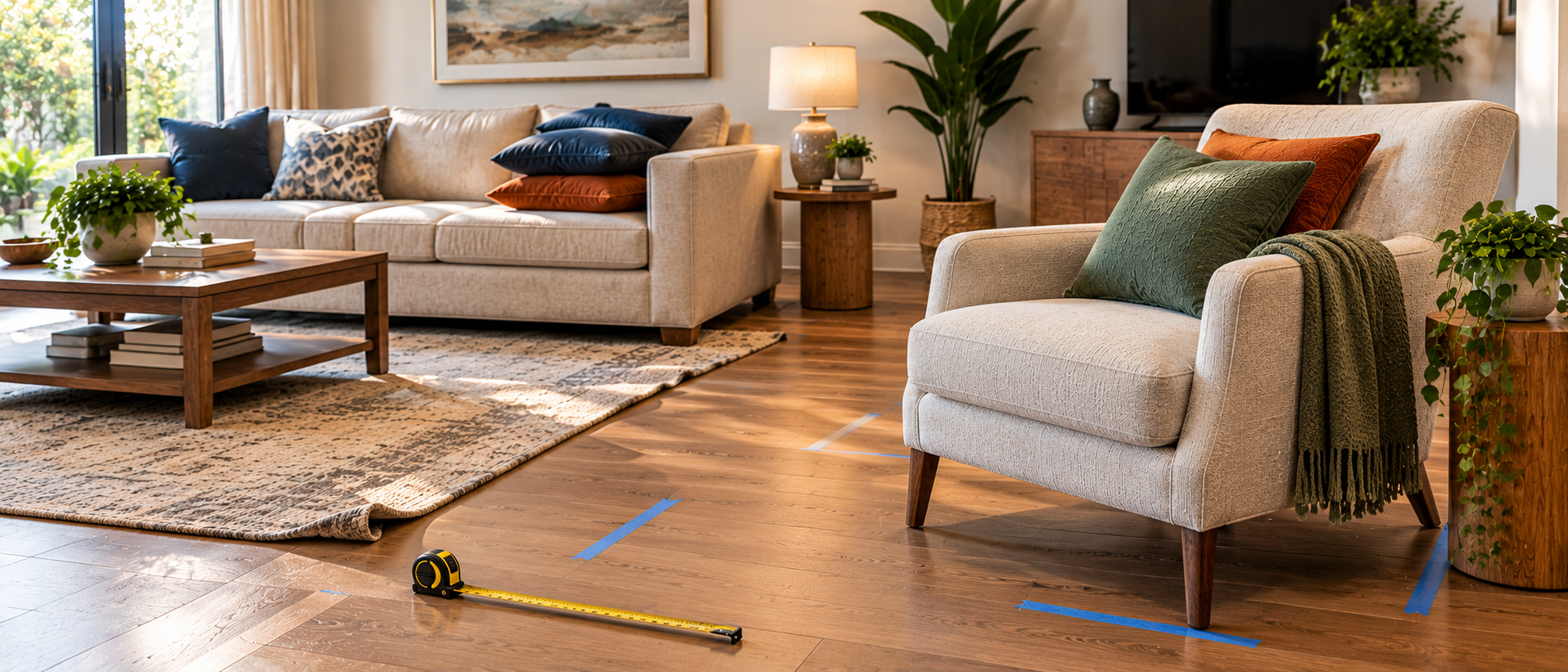
Now you've got some space to work with, experiment.
You don't need to completely reinvent the room.
Now you've got some space to work with, experiment. You don't need to completely reinvent the room.
Move the lounge slightly away from the wall.
Bring an occasional chair closer to the main seating area.
Move the recliner so it has enough room to operate properly.
Rotate the dining table 90 degrees.
Swap a side table from one side of the room to the other.
Sometimes moving a piece of furniture just 20 or 30 centimetres can improve a walkway or make a seating arrangement feel more connected.
Once you've tried something different, take another photo.
Furniture is easy to move back if the new layout doesn't work, so this is the time to experiment. You might be surprised by how much better the room feels without buying a thing.
4. Remove One Piece of Furniture
Most advice about refreshing a room focuses on what you can add. Try doing the opposite.
Look around for one piece of furniture the room could possibly do without. Maybe it's the small table that's become somewhere to pile things. Perhaps it's an occasional chair that nobody sits in.
It could be a cabinet that was useful years ago but doesn't really serve a purpose anymore. Move it into another room temporarily.
Then stand back and look again. Does the room feel more open? Is it easier to walk through? Does the remaining furniture suddenly have a little more breathing room?
If you miss the piece, you can always put it back. But you might discover that what the room needed most was a little more room.
5. Change the Rug or Change Where It Sits
A rug can have a big influence on how a room feels because it helps visually connect the furniture around it.
Before replacing your existing rug, check its position.
Could it sit further underneath the lounge? Would it work better rotated? Is the coffee table centred properly on it? Or is the real problem simply that the rug is too small for the furniture surrounding it?
Sometimes repositioning an existing rug is enough.
If the size, colour or style really isn't working, then changing the rug can be one of the quicker ways to give the room a noticeably different feel without replacing the major furniture.
Think of the rug as part of the furniture arrangement, not just something that fills an empty patch of floor.
6. Look Down: Does the Flooring Still Work?
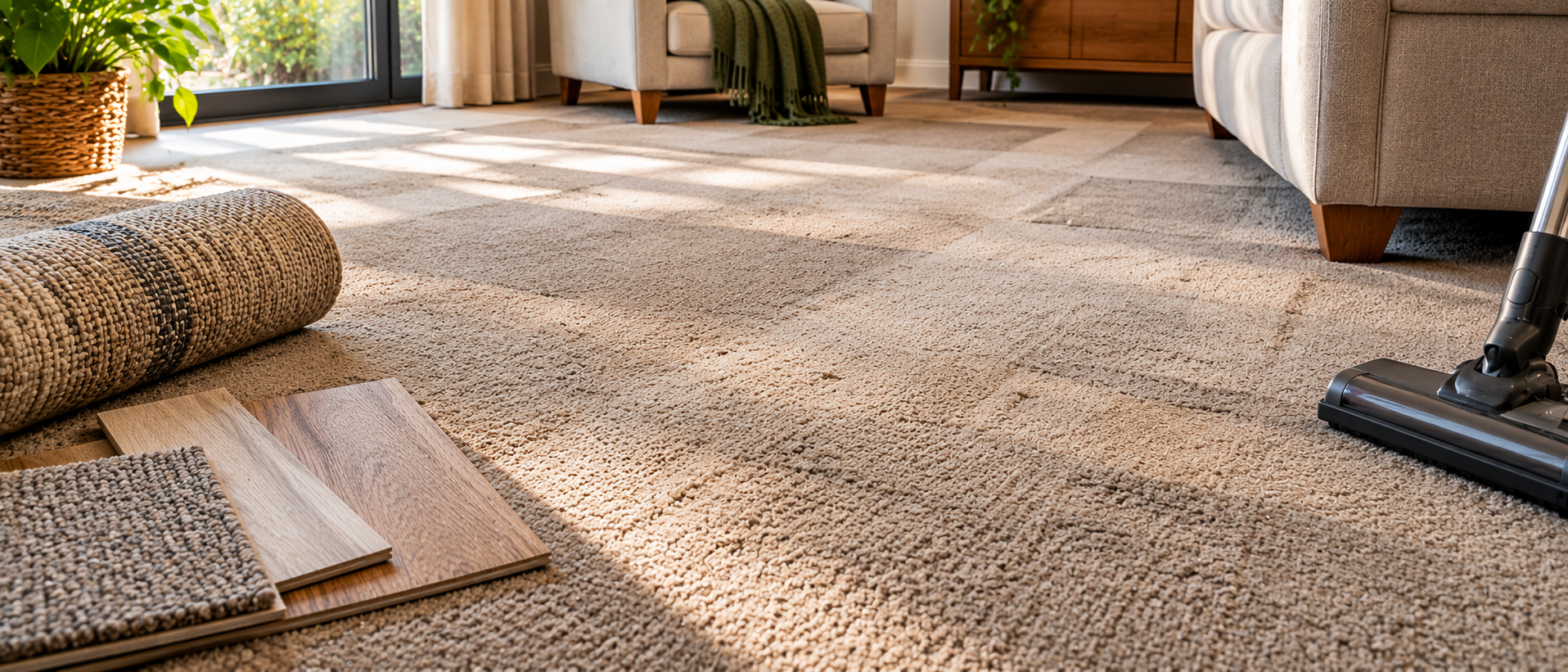
Once you've moved some furniture, you might see parts of the floor you haven't looked closely at for a while. This is a good opportunity to assess it properly.
Is the carpet particularly worn through the main traffic areas?
Has it faded?
Are there marks that no longer clean up?
Is older flooring making the rest of the room feel more dated than it actually is?
Or is the flooring perfectly good and simply needed a proper clean and a different furniture arrangement?
Obviously, replacing flooring isn't usually a Saturday-afternoon project. And that's okay.
Not everything you discover during your weekend refresh needs to be fixed that weekend.
There can be two lists:
What we can refresh now.
And:
What might be worth changing later.
Sometimes simply working out the difference between the two is progress.
7. Introduce One New Colour,Then Repeat It
If the room feels a little flat, colour can help. But that doesn't mean introducing five new colours at once.
Choose one colour that works with the furniture and flooring you already have.
It might be sage green. Burnt orange. Royal blue. Or something completely different that suits your home.
Then use that colour in two or three places.
A burnt-orange cushion might connect with a small amount of the same colour in artwork.
A sage throw could connect with a subtle green detail in a rug.
The colour doesn't need to match perfectly each time.
You're simply creating enough repetition for it to feel intentional.
Tip: One colour repeated around a room will often have more impact
than several unrelated colours used once.
8. Restyle One Surface
Don't try to redecorate every shelf, table and wall in the room. Pick one.
A sideboard is a great place to start. Remove everything from the top. Now put back just a few pieces.
Perhaps a lamp, a plant, a framed photo and one decorative item. Then leave some empty space around them.
You can do the same with a coffee table, entertainment unit or shelving.
If you've accumulated lots of smaller decorative pieces over the years, you don't have to get rid of them. Rotate them.
Keep some out now and bring different pieces back in a few months.
The goal isn't to make the room look empty. It's to give the things you actually like enough space to be noticed.
9. Change Something Soft
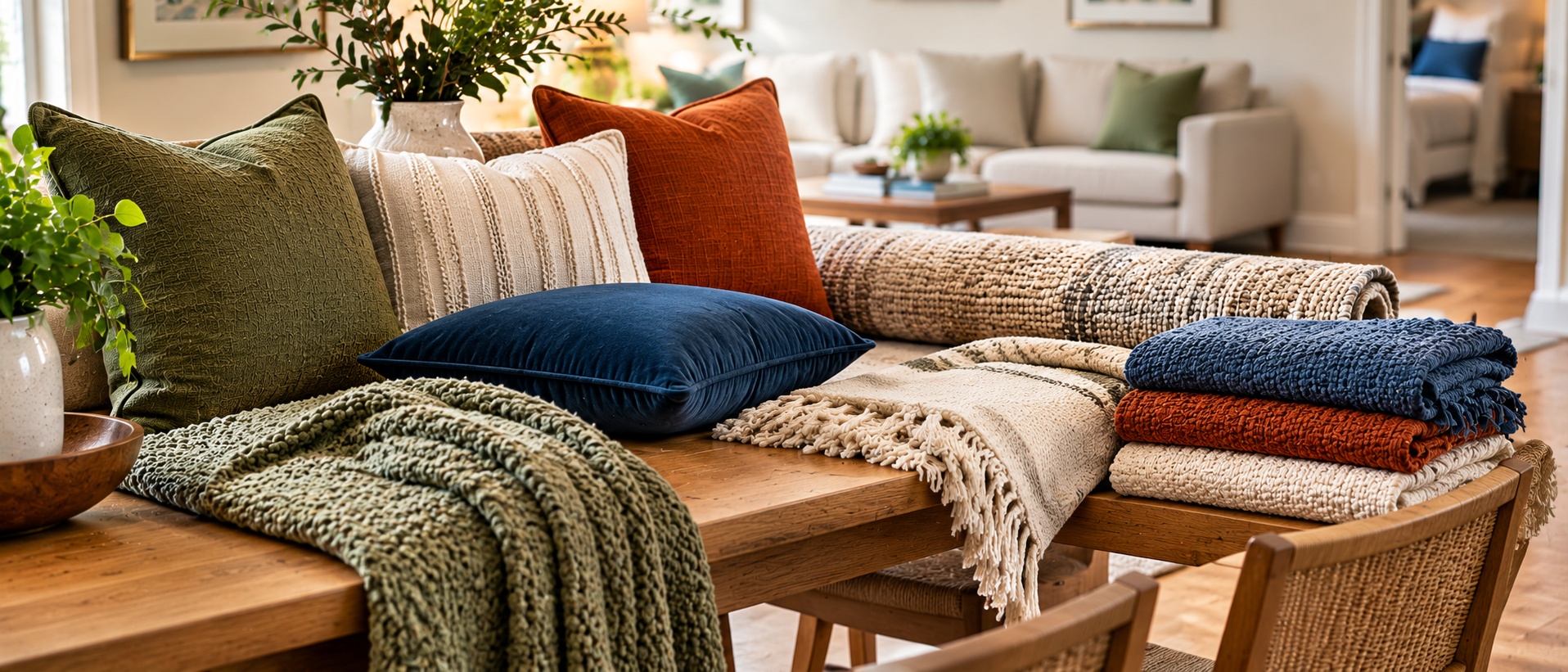
Soft furnishings are one of the easiest things to experiment with over a weekend.
Try a different combination of cushions. Fold a throw differently, or remove it altogether. Swap cushions between rooms.
Bring a rug from another part of the house into the room temporarily and see what happens.
In a bedroom, change the way the bedding is layered rather than immediately buying a completely new set.
You might already own something that works perfectly well, you've simply never tried it in that room.
This is also a good way to test a colour before committing to more of it.
10. Sunday Afternoon: Put Back Less Than You Took Out
By this point, the room should be starting to come back together. Now comes the important part.
Don't undo all your work by automatically returning every cushion, ornament, basket, magazine and decorative item to exactly where it started. Put things back slowly.
After each item, look at the room again.
Ask: Does this actually make the room better?
If the answer is yes, keep it. If you're not sure, leave it out for now. You can always put something back next week.
You may find that the room feels more finished with fewer finishing touches.
11. Take the Same Photo Again
Remember the photograph you took on Friday night? Go back to exactly the same spot. Stand in the same doorway and take another one.
Now, compare the two.
Perhaps you moved the lounge slightly, removed an unnecessary chair, repositioned the rug, changed a few cushions and simplified the sideboard.
None of those changes sounds particularly dramatic on its own. Together, they can make a surprisingly noticeable difference.
The room may feel larger.
The furniture might look more connected.
There may be clearer walkways.
Colours might make more sense.
And the room might simply feel calmer.
A room doesn't have to look completely different to work considerably better.
So, What Comes Next?
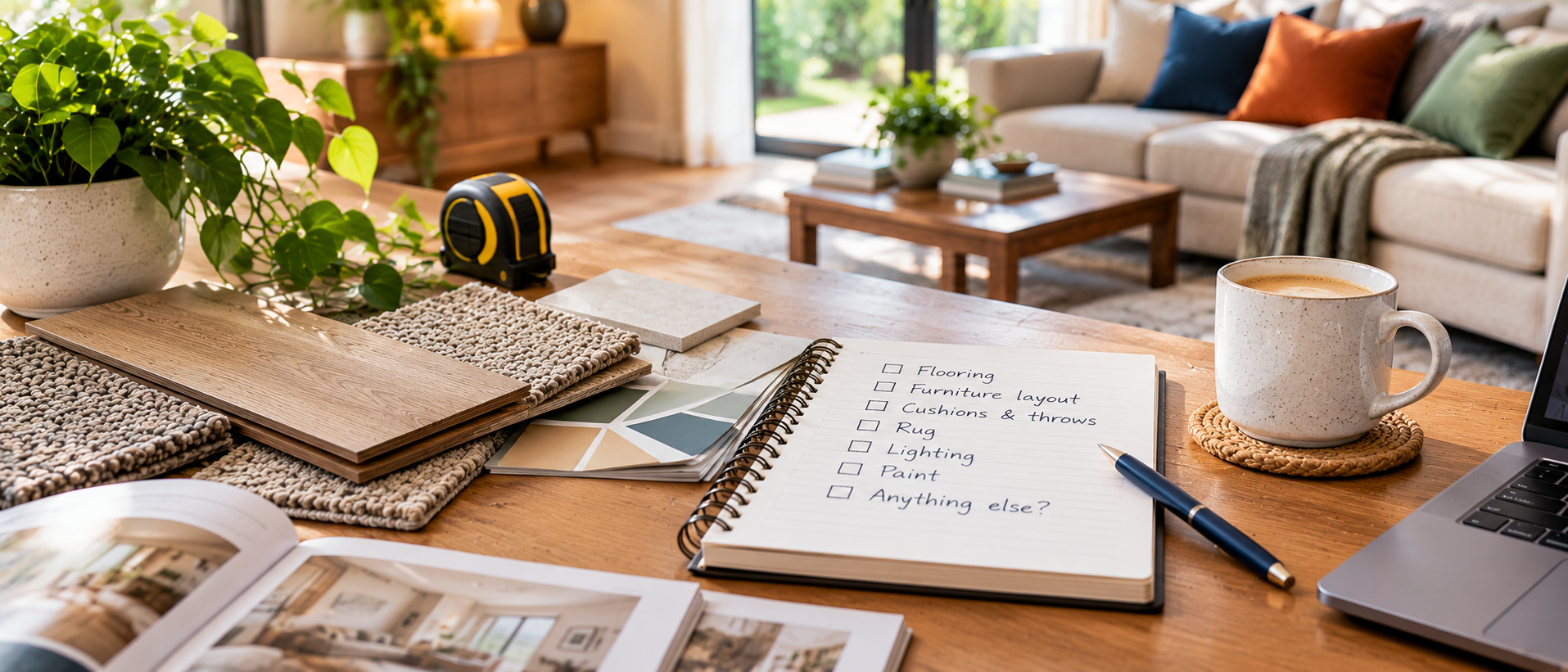
By Sunday afternoon, you should have a much better idea of what your room actually needs.
Perhaps rearranging the furniture and removing some clutter was enough.
Maybe you've realised your rug is simply too small.
You might discover that your lounge still looks great, but the flooring underneath it is what's making the room feel tired.
Or perhaps one particular piece of furniture really isn't working anymore.
The difference is that you're now making that decision after working with the room, rather than buying something and hoping it fixes the problem.
And there's no rule saying the next change has to happen immediately.
Live with the refreshed room for a while. See how it works.
Then, if your weekend project has revealed that a new rug, piece of furniture or flooring should be the next step, take some photos and measurements with you when you visit Ron Mahers Flooring & Furniture. We can help you find something that works with the room you've already started to create.
Because refreshing your home doesn't always require a major renovation.
One room. One weekend. A few considered changes.
Sometimes that's all it takes to make your home feel different again.