How to Choose the Right Mattress Without Overcomplicating It
Buying a new mattress should be fairly simple. You find one that fits your bed, feels comfortable and suits your budget. Done.
But once you start shopping, suddenly there are different sizes, firmness levels, spring systems, foam layers, pillow tops and plenty of other features to compare. It can get confusing quickly.
The good news is you don't need to become a mattress expert to choose a good mattress. A few simple considerations can make the process much easier.
1. Start With the Right Mattress Size
Before worrying about firmness or features, work out what size you actually need.
The most common mattress sizes in Australia are Single, King Single, Double, Queen and King.
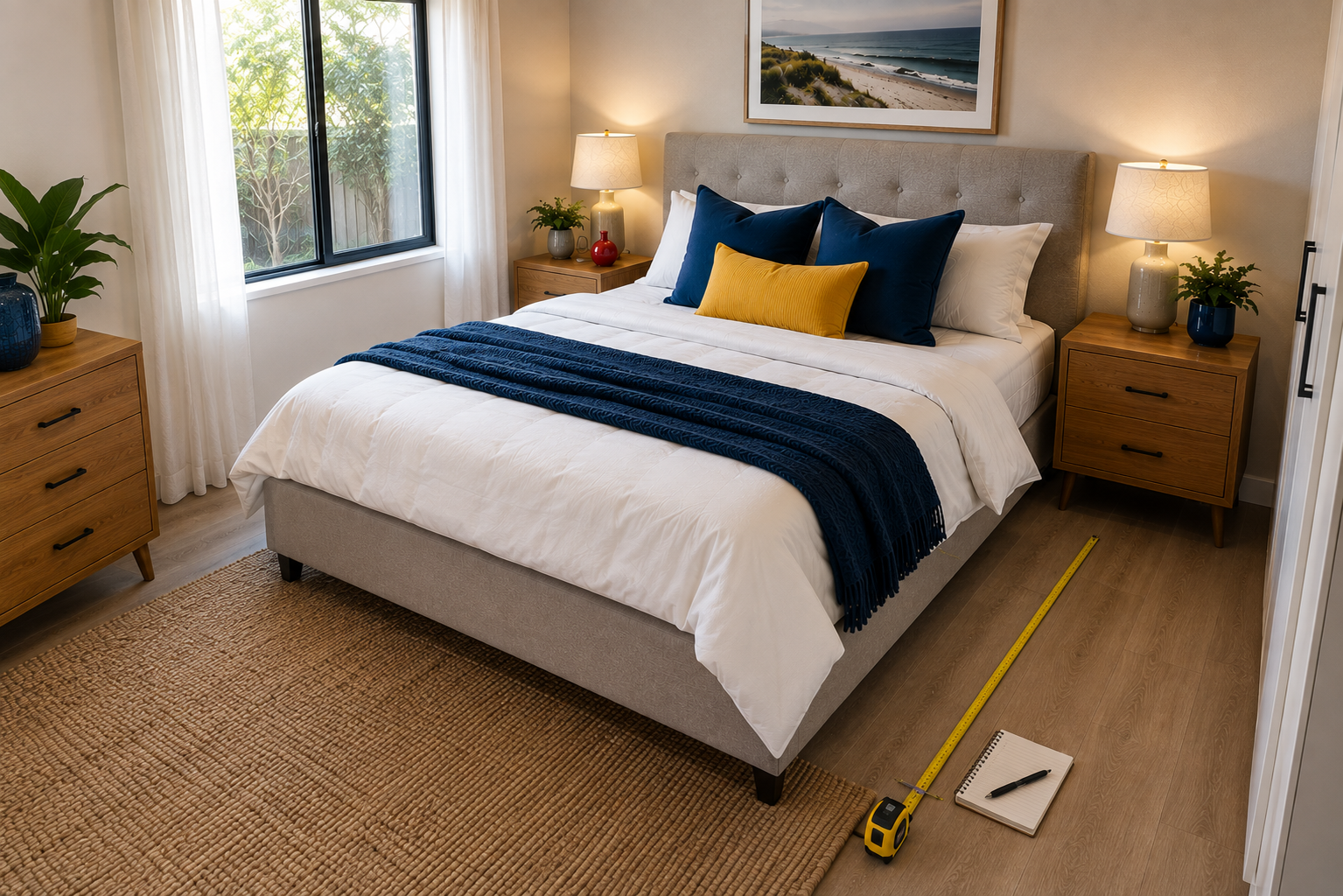
If you're replacing a mattress but keeping your existing bed base or frame, check its size before you start shopping. Don't rely on what you think it is, measure it if you're unsure.
If you're replacing the whole bed, think about the room as well.
A King might sound appealing, but not if it leaves you squeezing between the bed and the wall every morning. You still need enough space to comfortably move around the room and use wardrobes, drawers and bedside tables.
For couples, a larger mattress can provide some valuable extra sleeping space, while a Single or King Single may be all that's needed for a child, teenager or guest room.
Start with the room, the people using the bed and the space available.
2. Firm, Medium or Soft?
This is where mattress shopping can become unnecessarily complicated.
There isn't one firmness that's right for everyone.
Some people love sinking into a soft, cushioned mattress. Others prefer something much firmer underneath them. Many people fall somewhere in between.
Generally, you'll see mattresses described as:
Soft — more cushioning with a softer, sink-in feel.
Medium — a balance between cushioning and firmness.
Firm — a more solid feel with less sink.
These descriptions are useful for narrowing down your options, but don't treat them as strict rules.
A "medium" mattress from one range may feel different from a medium mattress in another. Your body size, sleeping position and personal preference will also change how a mattress feels.
Use the firmness rating as a starting point, not the final decision.
3. Comfort and Support Aren't the Same Thing
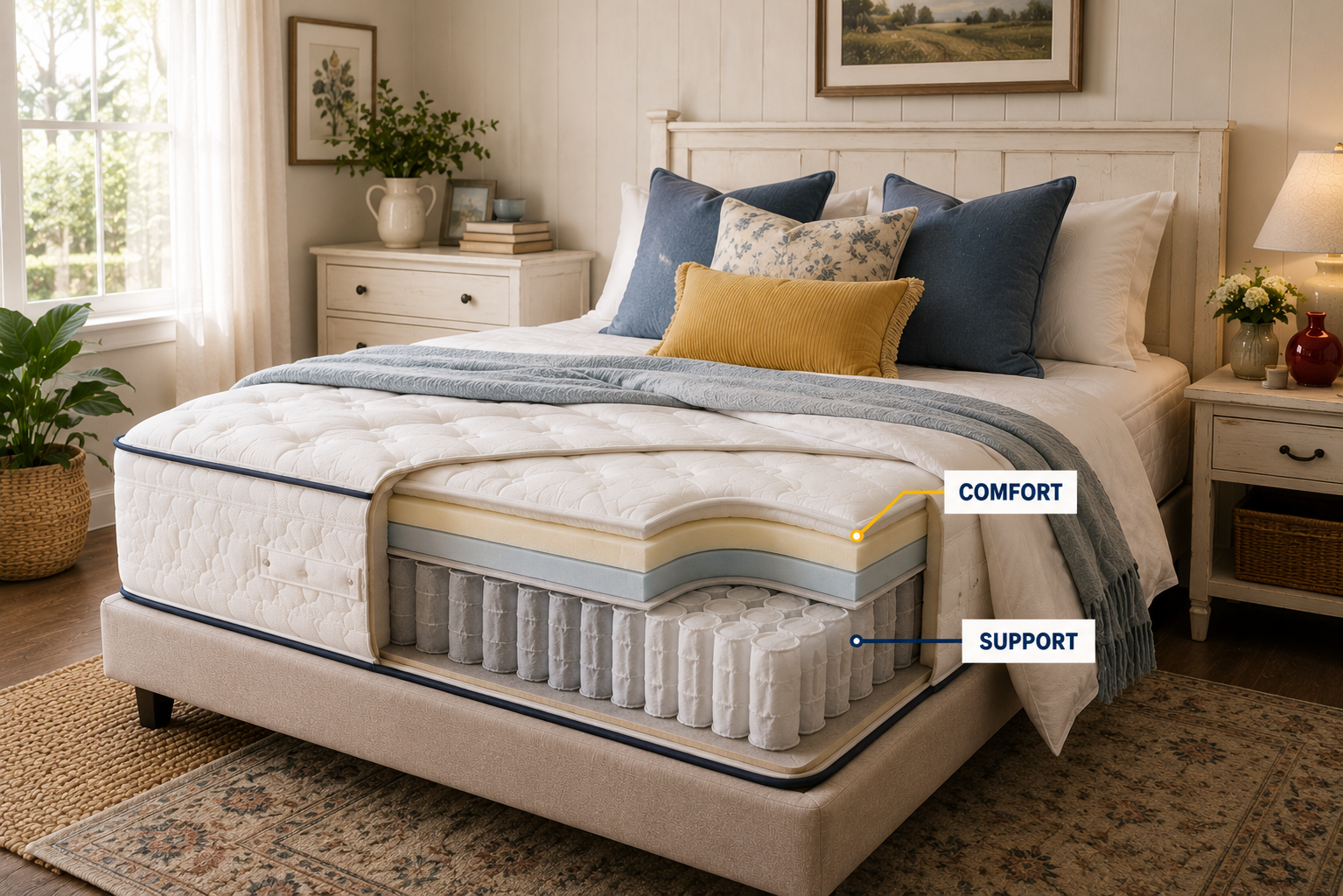
We often use the words comfort and support as though they mean the same thing, but they're slightly different.
Comfort is usually what you notice first. It's the cushioning and overall feel of the mattress when you lie down.
Support is about how the mattress holds your body while you're lying on it.
That means a mattress doesn't necessarily need to feel hard to provide support. A softer mattress can still be supportive depending on how it's constructed.
When trying mattresses, don't focus only on whether something feels soft or firm. Ask yourself a much simpler question:
Do I feel comfortable lying here?
4. Think About How You Actually Sleep
Before you go mattress shopping, think about your current bed. More importantly, think about what you don't like about it.
Maybe it feels too hard. Maybe you feel like you're sinking too far into it. Perhaps your partner's movement wakes you during the night, or you simply don't have enough room.
Also think about how you normally sleep.
Are you mostly on your side, back or stomach? Do you change positions throughout the night? Do you share the bed? Do you tend to feel hot when you sleep?
You don't need a scientific analysis of your sleeping habits. You're simply trying to identify what you like, what you don't like and what you'd like your next mattress to do differently.
5. Don't Get Lost in Mattress Terminology
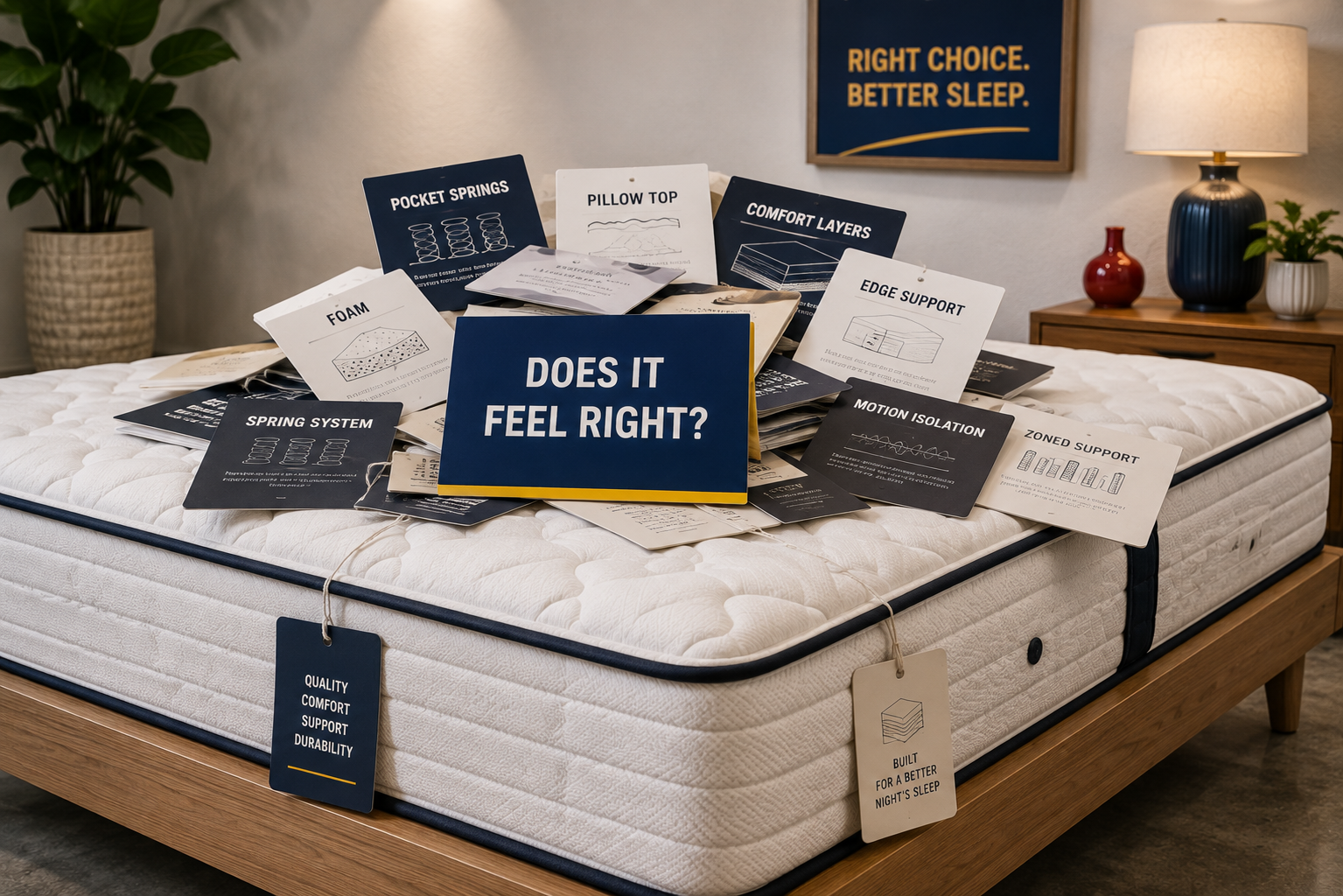
Pocket springs. Foam layers. Pillow tops. Comfort layers. Different types of support systems. Mattresses can come with a long list of features, and those features can certainly affect how a mattress feels and performs. But you don't need to memorise them all.
When comparing mattresses, ask what a particular feature actually means for you. Does it change the feel of the mattress? Does it reduce movement? Does it add cushioning? Does it affect how the mattress needs to be cared for?
Understanding the features that matter to you is useful. Choosing a mattress simply because it has the longest list of specifications isn't.
6. Actually Lie on the Mattress In-Store
Sitting on the edge of a mattress and bouncing up and down a couple of times isn't really testing it. Lie down.
Better still, lie in the position you normally sleep in.
Give yourself a few minutes to get a feel for the mattress rather than deciding within five seconds. Try a softer option. Try something firmer. Then compare them.
If you share your bed with someone, try the mattress together where possible. You'll get a much better idea of the available space and how much you notice the other person's movement.
And don't feel awkward lying on a mattress in a showroom. That's exactly what the display mattresses are there for.
A few minutes actually lying on a mattress will tell you far more than reading the label attached to it.

7. Don't Choose on Price Alone
Everyone has a budget, and there's nothing wrong with starting there. But price shouldn't be the only consideration.
The cheapest mattress isn't automatically the best value, just as the most expensive mattress isn't automatically going to give you the best night's sleep.
Instead, look for a balance between:
Comfort + Size + Quality + Budget
Remember, this isn't a piece of furniture you use occasionally. You're going to sleep on it every night.
Choose something that feels right and fits comfortably within the amount you're prepared to spend.
8. Check the Practical Stuff
Before making your final decision, there are a few practical details worth checking.
Make sure the mattress is suitable for your bed base or frame and that the complete bed will comfortably fit in the room.
It's also worth thinking about access. A large mattress still needs to make it through the front door, hallway, bedroom doorway or up the stairs.
Ask about the manufacturer's warranty, recommended mattress care and whether the mattress needs to be rotated.
And don't forget to check your delivery options, particularly if you're buying a larger mattress.
A couple of quick questions before you buy can save headaches later.
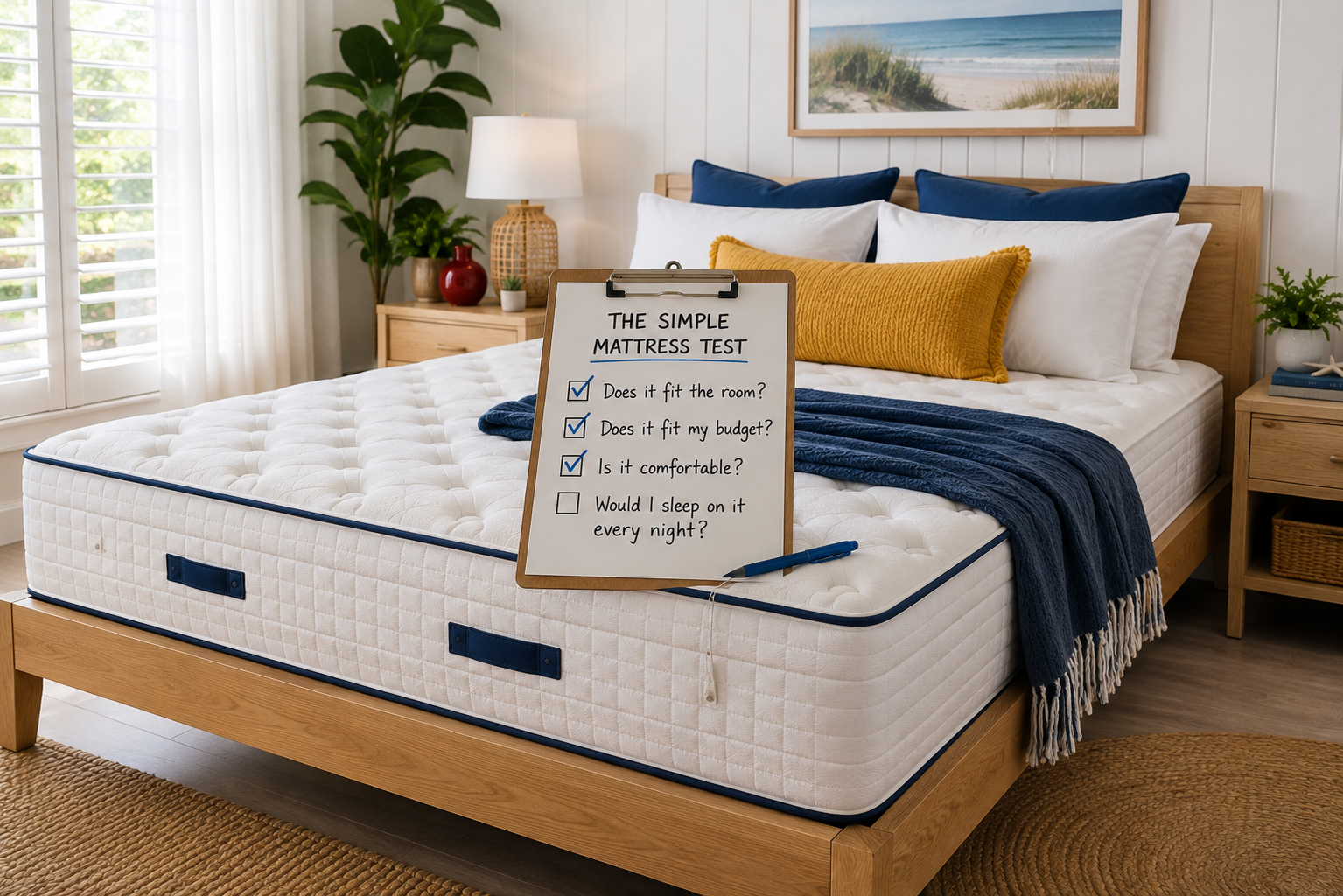
9. The Simple Mattress Test
If you're still trying to decide, forget all the terminology for a moment and ask yourself four questions:
Does it fit the room?
Does it fit my budget?
Am I comfortable lying on it in my normal sleeping position?
Would I be happy sleeping on this every night?
If the answer to all four is yes, you're probably getting pretty close.
Keep It Simple
Choosing a mattress doesn't need to involve hours of research or comparing every specification.
Start with the right size. Think about what you like and dislike about your current mattress. Try a few different firmness levels and actually spend some time lying on them.
Then choose the mattress that feels right for you.
Still not sure whether you prefer soft, medium or firm? Come in and try a few.
Sometimes the easiest way to choose a mattress is simply to lie down.